 Skip to content

Grip socks are no longer limited to yoga classes or rehabilitation settings. Today, they are used by Pilates studios, fitness brands, healthcare providers, sports organizations, and retailers looking for products that improve stability while creating additional branding opportunities.
What makes them different from regular socks is not just the silicone pattern on the sole. The effectiveness of a grip sock depends on how the sock is knitted, how the grip material is applied, and how well the finished product holds up after repeated wear and washing.
For brands considering a custom grip sock program, understanding how these products work can make sourcing decisions much easier.
What Makes Grip Socks Different From Regular Socks?
A standard sock is designed to provide comfort, moisture management, and protection. A grip sock adds another function by helping reduce unwanted movement between the foot and the surface beneath it.
That surface might be a yoga mat, Pilates reformer, gym floor, rehabilitation equipment, hardwood flooring, or even the inside of certain athletic footwear.
The difference may appear simple from the outside, but the construction process is significantly more involved than producing a standard sock.
A grip sock typically combines:
- A knitted sock structure
- A carefully selected yarn blend
- A grip application process
- Heat setting and finishing treatments
- Additional quality inspection requirements
Each element contributes to how the product performs during use.
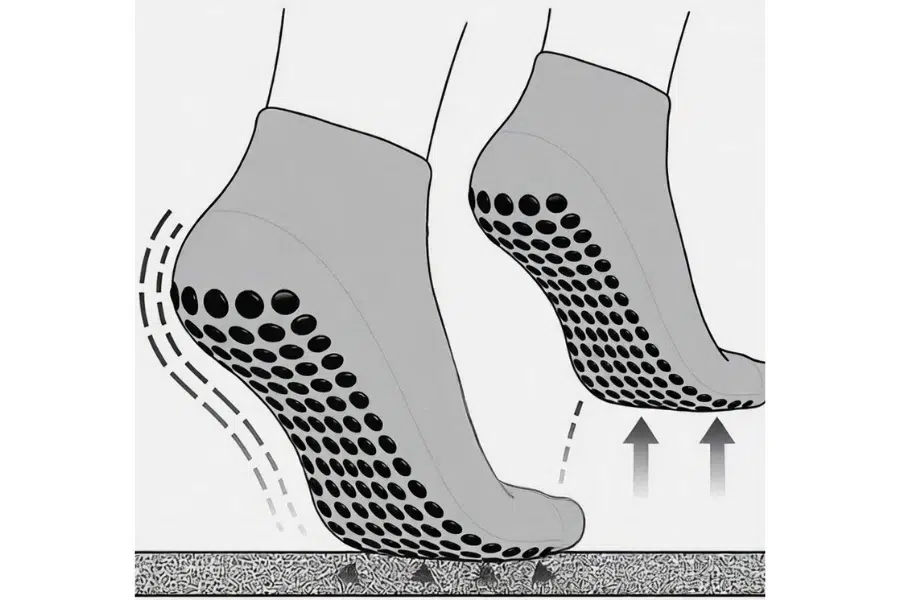
How Anti Slip Socks Actually Work
The purpose of a grip sock is not to eliminate movement completely. Instead, it helps create more controlled movement by increasing traction where it matters most.
Increasing Surface Friction
The most obvious function of grip socks is creating friction between the sole of the sock and the contact surface.
Without grip elements, smooth flooring can allow the foot to slide unexpectedly during directional changes, balance exercises, or controlled movements.
Grip applications create additional contact points that help the wearer maintain better stability.
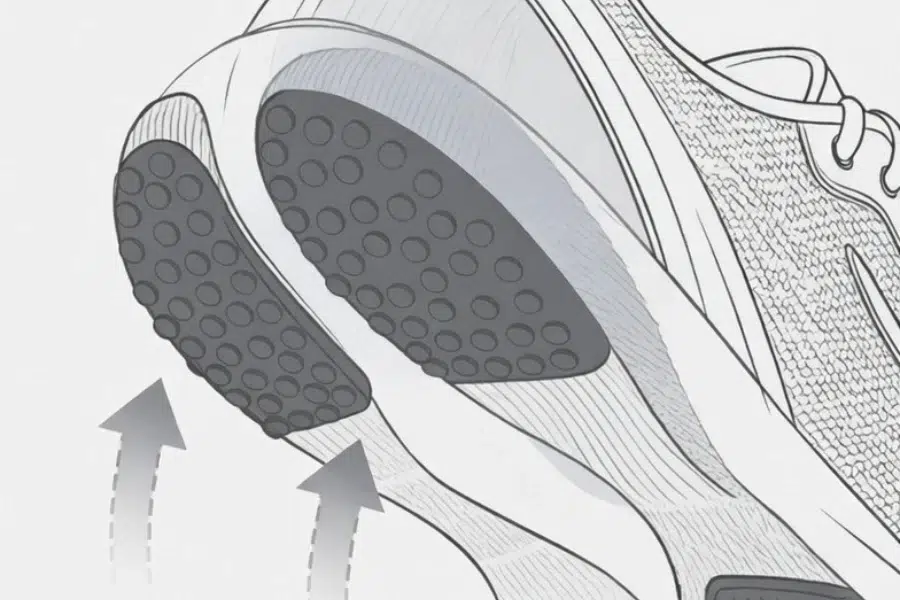
Reducing Internal Foot Movement
Many people assume grip socks only interact with the floor.
In reality, they can also help reduce foot movement inside footwear.
This is particularly useful in activities that involve rapid changes of direction, repeated stops and starts, or movements that place pressure on the forefoot and heel.
When the foot moves less inside the shoe, users often experience improved control and fewer hot spots that may contribute to blister formation.
Improving Movement Efficiency
Small amounts of unwanted slipping can affect how efficiently force transfers from the foot to the ground.
Grip socks help create a more stable platform, which is one reason they are commonly used in Pilates, yoga, barre training, rehabilitation programs, and certain sports environments.
How Grip Technology Is Applied During Production
Many people assume the grip pattern is simply printed onto the bottom of the sock.
The actual manufacturing process is more involved.
The sock is first knitted, linked, inspected, and shaped before the grip application stage takes place.
The grip treatment is generally considered a finishing process rather than a knitting process.
Silicone Grip Applications
Silicone is one of the most commonly used materials for grip socks.
It offers a balance of flexibility, durability, softness, and wash resistance.
For many studio and wellness applications, silicone provides reliable performance while remaining comfortable against the foot.
PVC and PU Alternatives
Some production programs may use PVC or PU-based grip materials.
These alternatives can help reduce production costs in certain situations.
However, performance expectations, environmental requirements, and target market positioning often influence material selection.
For many private label programs, grip material choice becomes an important sourcing decision rather than a simple production detail.
What Makes a Durable Grip Sock?
Not all grip socks perform the same after months of use.
The quality of the grip material is only one part of the equation.
Fabric Stability
A stable knitted structure helps maintain the relationship between the grip pattern and the foot.
If the sock stretches excessively or loses shape after washing, grip performance can become inconsistent.
This is one reason yarn selection and knitting construction matter as much as the grip application itself.
Heat Setting and Finishing
After knitting, socks typically go through shaping and finishing processes designed to improve size consistency and product appearance.
Proper finishing can also influence how well grip applications remain attached over time.
Poor finishing often leads to early performance issues long before the grip material itself wears out.
Grip Pattern Design
The arrangement of grip elements affects how traction is distributed across the foot.
Some designs use small silicone dots.
Others use larger contact zones or targeted grip areas positioned around pressure points.
The most suitable option depends on the intended application rather than appearance alone.
Material Options for Different Applications
The yarn blend used in a grip sock affects comfort, stretch, durability, moisture management, and long-term performance.
Different environments often require different priorities.
Cotton-Rich Blends
Cotton remains one of the most popular options for studio socks.
It offers a soft feel and comfortable everyday wear experience.
Many Pilates and yoga brands prefer cotton-rich constructions because users often wear the product barefoot.
Polyester Blends
Polyester can improve durability and moisture management.
It is commonly used in products expected to handle higher activity levels or more frequent washing.
Nylon Reinforcement
Nylon is frequently added to improve abrasion resistance in high-stress areas such as the heel and toe.
This can help extend product life in both athletic and commercial settings.
Spandex for Fit Retention
Spandex contributes elasticity and recovery.
A properly balanced amount helps maintain fit consistency while reducing sagging after repeated use.
Who Typically Orders Custom Grip Socks?
Grip socks are used in a surprisingly wide range of industries.
Pilates Studios
Many studios use custom grip socks as part of their retail offerings.
Branded socks can reinforce identity while providing members with a product they already need during class.
Yoga Brands
Yoga-focused brands often use grip socks to expand product lines and create additional merchandise opportunities.
The ability to incorporate logos and brand colors makes customization particularly attractive.
Healthcare and Rehabilitation Facilities
Grip socks are commonly used in environments where reducing slip risk is a priority.
In these settings, durability and consistency often matter more than decorative design elements.
Fitness and Wellness Companies
Fitness brands increasingly include grip socks in membership programs, event packages, and retail collections.
The product works well because it combines practical functionality with visible branding opportunities.
Logo and Branding Options
A grip sock can function as both a performance product and a branding tool.
The most effective customization method depends on the intended use.
Knitted Logos
Jacquard knitting integrates the logo directly into the sock structure.
Because the design becomes part of the fabric itself, it maintains flexibility and comfort.
This approach is often preferred for long-term wear.
Embroidered Logos
Embroidery can create a more prominent visual effect.
However, it may introduce localized stiffness depending on placement and design complexity.
For products worn directly against bare skin, brands often evaluate comfort carefully before selecting embroidery.
Custom Packaging
Packaging can play a significant role in retail presentation.
Common options include:
- Header cards
- Wrap sleeves
- Hang tags
- Poly bags
- Retail boxes
The right packaging depends on whether the product is intended for retail shelves, studio sales, promotional programs, or direct-to-consumer distribution.
Things Buyers Should Consider Before Ordering
Many first-time buyers focus primarily on logo design.
In practice, several other factors often have a larger impact on long-term success.
Grip Durability
A grip pattern should remain effective after repeated washing and use.
Durability testing is often more valuable than choosing the most visually complex design.
Size Planning
Offering too many sizes can increase inventory complexity.
Offering too few can create fit issues.
Finding the right balance is usually more important than maximizing size options.
Reorder Consistency
Many businesses start with relatively small quantities and scale later.
Choosing a supplier that can maintain consistent materials, colors, and grip placement across repeat orders helps avoid unnecessary problems in future production runs.
Branding Method Selection
The logo method that looks best on a mockup may not always provide the best wearing experience.
Understanding the trade-offs between jacquard knitting, embroidery, and other decoration methods can prevent costly revisions later.
Why Many Brands Choose Custom Grip Socks
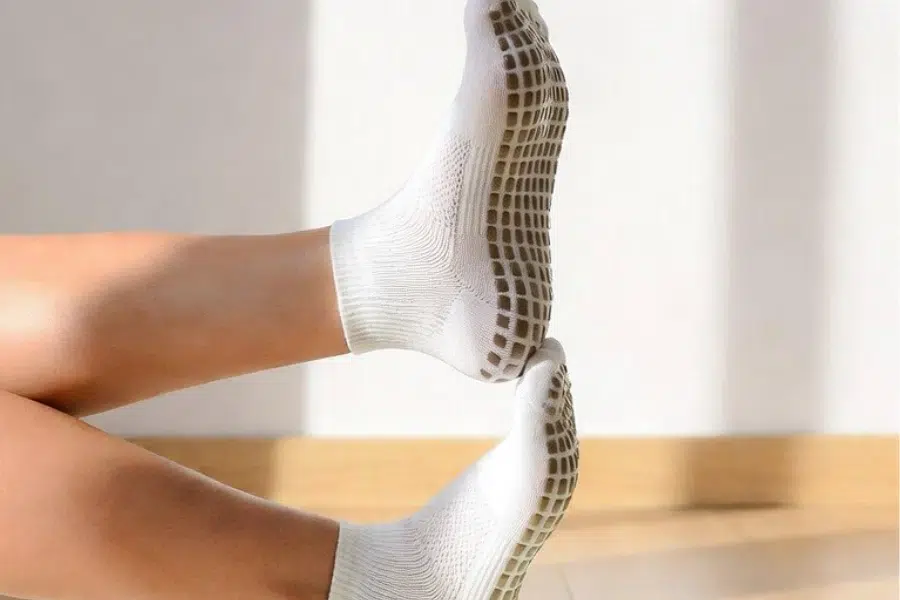
Grip socks occupy an interesting position in the market.
They solve a real performance problem while also creating opportunities for branding, retail sales, and customer engagement.
For studios, wellness brands, healthcare organizations, and fitness companies, they offer a practical product that users interact with directly during activities where comfort and stability matter.
That combination of functionality and brand visibility is one reason custom grip socks continue to gain attention across multiple industries.
FAQ
Are grip socks only used for yoga and Pilates?
Not anymore. While yoga and Pilates remain major markets, grip socks are also used in rehabilitation centers, healthcare facilities, fitness clubs, sports programs, and wellness brands that want additional traction and stability for their users.
Do silicone grips wear off after washing?
Over time, any grip material will experience some wear. However, durability depends on factors such as grip material quality, finishing processes, washing conditions, and overall sock construction rather than the silicone alone.
What materials are commonly used for custom grip socks?
Most programs use blends that combine cotton, polyester, nylon, and spandex. The exact composition depends on priorities such as softness, moisture management, durability, stretch retention, and intended application.
Is embroidery a good option for grip socks?
It can be, especially when visual impact is important. However, embroidery may create localized stiffness. Many brands choose knitted logos because they remain integrated into the sock structure and generally feel more comfortable during barefoot activities.
What should brands evaluate before placing a custom grip sock order?
Beyond logo design, buyers should consider grip durability, material selection, sizing strategy, packaging requirements, and the ability to maintain consistency across future reorders. These factors often have a greater impact on long-term success than appearance alone.

