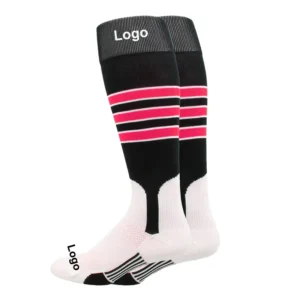
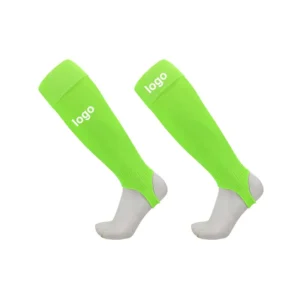
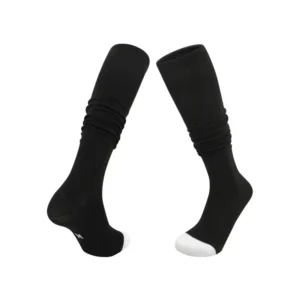
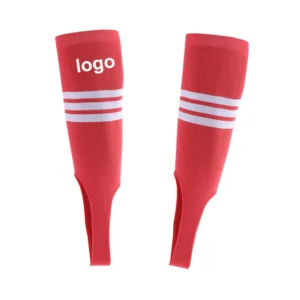
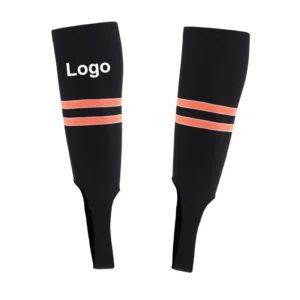
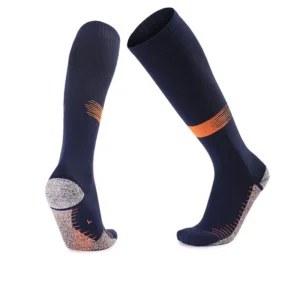
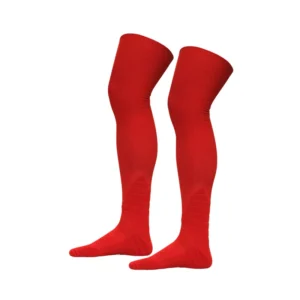
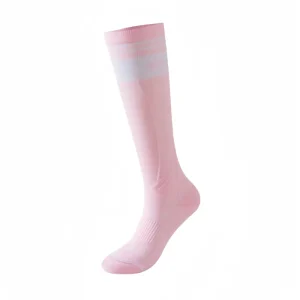
Custom Baseball Socks
Baseball socks are designed differently from ordinary athletic socks. Their longer profile, reinforced construction, and team-focused customization options make them a standard part of uniforms for schools, travel teams, clubs, and sports brands.
SocksMaven manufactures custom baseball socks for bulk orders, helping organizations create consistent team identity while maintaining comfort throughout practices, tournaments, and full competitive seasons.
Why Baseball Socks Are Usually Knee High
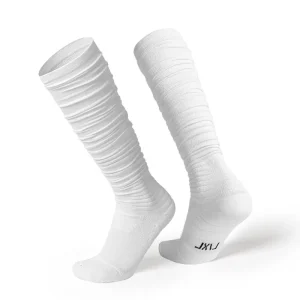
Unlike many athletic socks that stop at the ankle or mid-calf, baseball socks are typically built with an extended leg section that reaches the knee.
The longer design helps create a cleaner uniform appearance and allows team colors, stripes, and logos to remain visible even when players wear baseball pants. Additional coverage can also reduce direct friction between the leg and protective equipment during long games.
For many teams, sock height is not simply a style choice. It is part of maintaining a consistent on-field appearance across the entire roster.
Baseball Socks vs Regular Athletic Socks
| Feature | Baseball Socks | Regular Athletic Socks |
| Height | Usually knee high | Ankle to crew length |
| Team branding area | Large | Limited |
| Uniform integration | High | Moderate |
| Reinforcement zones | Common | Varies |
| Team ordering | Frequent | Less common |
| Color consistency | Important | Less critical |
The biggest difference is that baseball socks are often purchased as part of a team program rather than as individual sportswear. Repeatability, sizing consistency, and color matching usually matter more than seasonal fashion trends.
How Baseball Socks Are Constructed
A baseball sock contains several functional zones that work together during play.
Typical construction includes:
- Ribbed cuff for secure fit
- Extended leg section
- Reinforced heel
- Reinforced toe
- Cushioned foot area
- Stretch zones for movement
The heel and toe areas often experience the greatest wear because of repeated running, pivoting, and sliding movements. Reinforcement yarns are frequently used in these sections to improve durability and extend product life.
This construction approach helps socks remain functional through an entire season rather than showing early wear in high-friction areas.
Cushioning Without Excess Bulk
Many baseball players spend several hours in cleats during tournaments and practice sessions.
Thick socks may initially feel comfortable, but excessive bulk can reduce shoe fit and increase heat buildup. For this reason, many performance-oriented designs use a half-terry construction.
In this structure, cushioning is concentrated under the foot while the upper portion remains lighter and more breathable. The result is a practical balance between impact absorption and airflow.
This approach is particularly useful for teams competing in warmer climates or during summer tournaments.
Material Options for Different Team Needs
Material selection often depends on playing conditions, budget, and performance priorities.
Cotton Blend Baseball Socks
Cotton-rich blends remain popular because they feel familiar, provide natural comfort, and work well for school programs and recreational leagues.
Performance Polyester Blends
Polyester-based constructions dry faster and are commonly selected for competitive teams that play multiple games within a short period.
Nylon Reinforcement
Nylon is frequently added to high-wear areas because it helps improve abrasion resistance without significantly increasing weight.
Stretch Components
Spandex helps maintain shape and supports a secure fit throughout repeated washing and wear.
Custom Logo and Team Branding Options
For many organizations, baseball socks serve as part of the team’s visual identity.
Popular customization options include:
- Team colors
- Knitted logos
- Mascots
- Player numbers
- Stripe patterns
- School branding
Jacquard knitting is often preferred for baseball socks because the design becomes part of the sock structure itself rather than being applied afterward. This helps maintain flexibility and keeps the branding integrated into the product.
For long-term team programs, simpler logo layouts often provide better repeat-order consistency and easier color matching.
Who Orders Custom Baseball Socks
Baseball socks are commonly ordered by:
- Youth baseball organizations
- School athletic departments
- Travel teams
- Club programs
- Sports retailers
- Promotional merchandise brands
Each group tends to prioritize different factors. Schools often focus on budget control and roster consistency, while retailers may place greater emphasis on packaging and design flexibility.
Considerations Before Placing a Team Order
The most successful baseball sock programs are usually planned around long-term use rather than a single season.
Before ordering, consider:
- Preferred sock height
- Team color requirements
- Logo complexity
- Player size distribution
- Reorder expectations
Teams that standardize colors and branding generally find future reorders easier to manage because production specifications remain consistent year after year.
Why Consistency Matters in Team Programs
For baseball organizations, consistency often matters more than creating the most complicated design.
When logos, colors, sizing, and construction remain standardized, replacement orders become easier and new players can be integrated into existing programs without creating visual differences across the team.
This is one reason many established organizations continue using the same sock specifications for multiple seasons.
FAQ
What length are baseball socks normally?
Most baseball socks use a knee-high design that extends over the calf. This construction helps maintain a uniform appearance and provides additional coverage beneath baseball pants.
Are baseball socks suitable for other sports?
They can be used for sports that require long socks, but baseball socks are generally designed around baseball uniforms, cleat use, and team color presentation rather than protective equipment such as shin guards.
What is the most durable material for baseball socks?
Durability usually comes from the overall construction rather than a single fiber. Many team socks combine cotton or polyester with nylon reinforcement in high-wear areas to improve longevity.
Can logos be knitted directly into baseball socks?
Yes. Jacquard knitting allows logos and team graphics to become part of the sock structure, helping maintain flexibility while supporting consistent repeat production.
How many sizes should a team order?
Most organizations divide orders into youth and adult ranges. Collecting player sizing information before production helps simplify distribution and reduce fitting issues after delivery.
 Skip to content