Why Yoga Socks Matter During Practice
Yoga is built around control rather than speed. Whether you’re moving through a slow flow, holding a balance pose, or transitioning between positions, even small amounts of foot movement can affect stability.
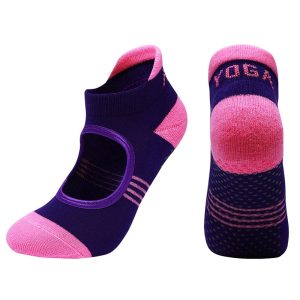
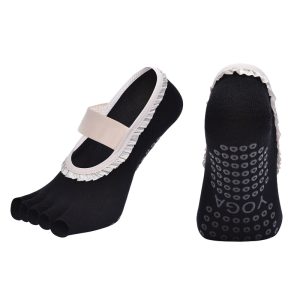
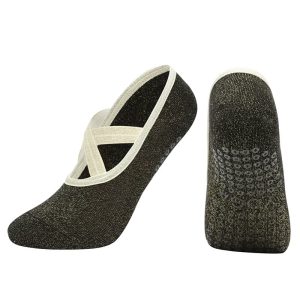
Yoga socks help create a more secure connection between the foot and the floor. Grip zones reduce unwanted slipping, while the knitted structure allows natural movement without restricting flexibility.
They’re commonly used in yoga studios, wellness centers, home practice spaces, and multi-purpose fitness facilities where hygiene, comfort, and stability all matter.
How Yoga Socks Support Balance and Movement
Unlike standard athletic socks, yoga socks are designed to maintain contact with the floor during controlled movements.
A well-designed grip layout focuses traction where pressure naturally occurs, particularly around the forefoot and heel. This helps improve stability during standing poses while allowing smooth transitions between movements.
The goal isn’t aggressive traction. The goal is predictable movement and better balance.
Yoga Sock Construction and Comfort
The structure of the sock influences how it feels throughout a session.
Many yoga socks use lightweight knitted uppers combined with cushioned sole areas that provide comfort without adding unnecessary bulk. Similar to half-terry constructions used in performance socks, extra yarn loops in selected areas can improve underfoot comfort while maintaining flexibility and breathability.
Ribbed cuffs help keep the sock in place, while stretch zones allow the fabric to move naturally with the foot.
This combination creates a sock that feels secure without feeling restrictive.
Material Options for Custom Yoga Socks
Material selection affects both comfort and long-term wear performance.
Cotton remains one of the most popular choices because of its soft feel and moisture absorption properties. Combed cotton is often selected for studio products because it creates a smoother surface and a more refined appearance.
Nylon is frequently blended into yoga socks to improve durability and help maintain shape through repeated use and washing.
Spandex provides the stretch and recovery needed to keep the sock fitted throughout movement.
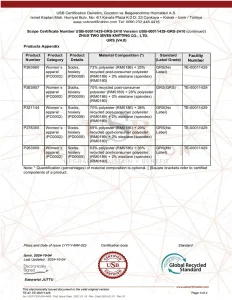
Depending on the intended use, bamboo fibers, recycled polyester, or other specialty yarns may also be incorporated into custom designs.
Popular Yoga Sock Styles
Different users prefer different levels of coverage.
Full-Toe Yoga Socks
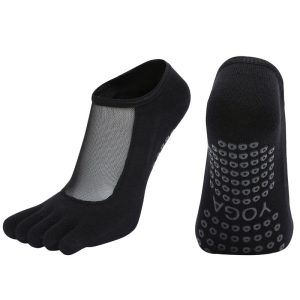
Provide complete foot coverage and are often selected for studio environments where hygiene is a priority.
Open-Toe Yoga Socks
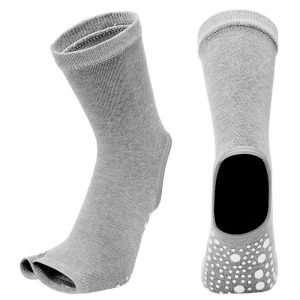
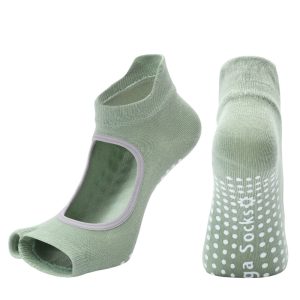
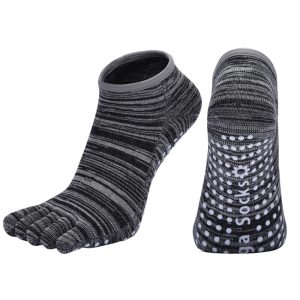
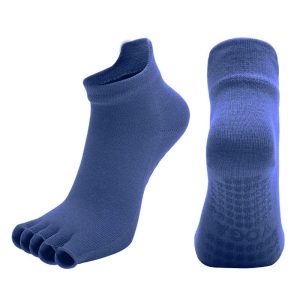
Allow greater toe mobility and sensory feedback while maintaining grip under the foot.
Low-Cut Yoga Socks
A lightweight option commonly used for yoga, Pilates, and barre classes.
Crew-Length Yoga Socks
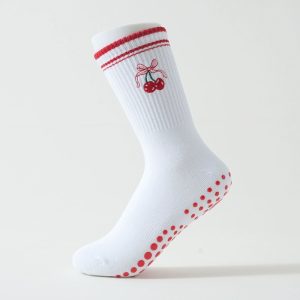
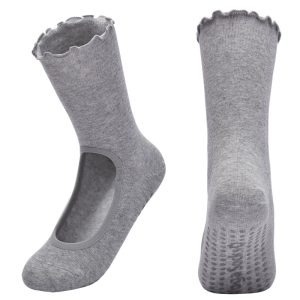
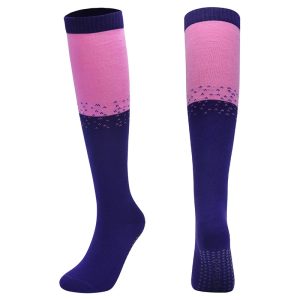
Offer additional coverage and are often chosen for cooler environments or branded retail collections.
Who Orders Custom Yoga Socks
Custom yoga socks are used across a wide range of programs and businesses.
Yoga Studios
Studio-branded socks create a consistent experience for members while providing an additional retail opportunity.
Wellness Brands
Many wellness brands add yoga socks to broader product collections that include apparel and accessories.
Pilates and Barre Programs
The same grip and stability benefits that support yoga practice also make these socks suitable for other low-impact fitness activities.
Corporate Wellness Programs
Custom socks are increasingly included in employee wellness kits, event packages, and fitness initiatives.
Branding Options for Custom Yoga Socks
Yoga socks can be customized to reflect a studio, brand, or program without compromising functionality.
Common customization options include:
- Jacquard logos integrated into the knitted structure
- Embroidered branding elements
- Custom color combinations
- Printed graphics
- Custom grip patterns
- Retail packaging and hang tags
For many brands, knitted logos remain one of the most practical choices because they maintain flexibility and hold up well through repeated washing.
Things to Consider Before Ordering
Before developing a custom yoga sock program, it’s worth considering:
- Intended activity
- Sock height preference
- Open-toe or full-toe construction
- Cushioning requirements
- Grip coverage
- Branding needs
- Packaging requirements
- Future reorder plans
Making these decisions early usually helps simplify sampling and improves consistency across future production runs.
Why Businesses Choose SocksMaven
Many yoga programs are built around consistency. Members expect the same fit, grip performance, and appearance each time they purchase a new pair.
SocksMaven supports custom yoga sock production with flexible branding options, multiple construction choices, and manufacturing processes designed to maintain consistency across repeat orders.
Whether you’re building a studio merchandise program, launching a wellness product line, or developing a retail collection, the focus remains on creating yoga socks that support movement and long-term wear.
Frequently Asked Questions
Are yoga socks and grip socks the same?
Most yoga socks use grip elements, but not all grip socks are designed specifically for yoga. Yoga-focused designs typically prioritize flexibility, balance, and natural foot movement in addition to traction.
What materials work best for yoga socks?
Cotton blends remain one of the most common choices because they balance comfort, moisture management, and durability. Nylon and spandex are often added to improve stretch, recovery, and long-term wear performance.
Should I choose open-toe or full-toe yoga socks?
Open-toe designs provide more toe mobility and floor awareness, while full-toe versions offer greater coverage and are often preferred in studio environments focused on hygiene.
Do custom yoga socks work for Pilates and barre classes?
Yes. Many studios use the same sock designs across yoga, Pilates, and barre programs because all three activities benefit from improved traction and controlled movement.
Can yoga socks include custom logos and packaging?
Yes. Logos can be added through jacquard knitting, embroidery, or printing, while packaging options can be adapted for studio retail programs, membership kits, and wellness product collections.
 Skip to content