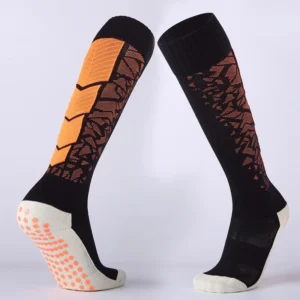
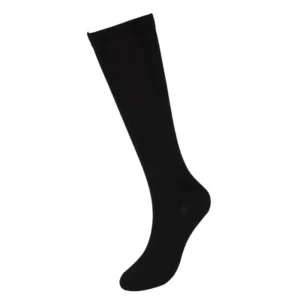
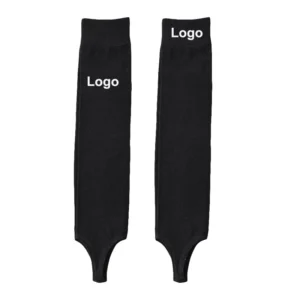
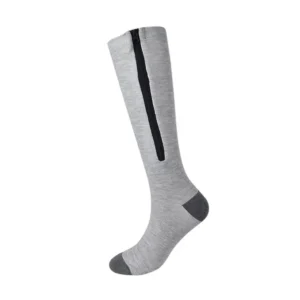
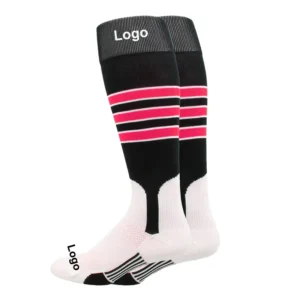
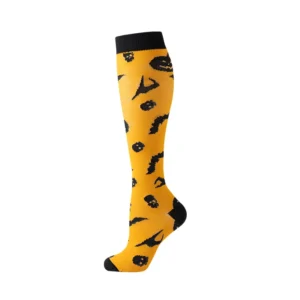
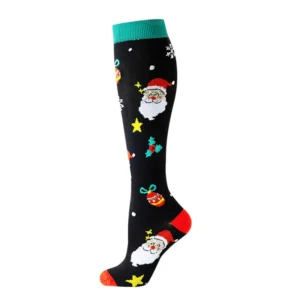
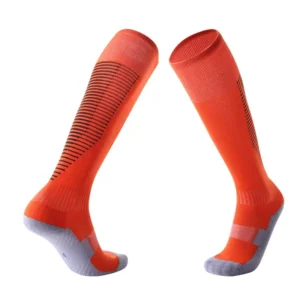
Custom Knee-High Socks
Knee-high socks cover more of the leg than standard crew socks, which means fit, stretch, and structure become much more important. A pair that slips down, loses shape, or feels uneven around the calf quickly becomes uncomfortable, especially during long periods of wear.
At SocksMaven, we help brands, schools, sports programs, and retailers develop custom knee-high socks that combine reliable fit, consistent sizing, and flexible branding options. Whether the goal is a uniform program, a sports team design, or a retail collection, every project starts with how the socks will actually be worn.
What Makes Knee-High Socks Different
Unlike ankle or crew socks, knee-high styles must maintain consistent tension from the cuff down to the foot. The additional leg length requires careful control of stretch, recovery, and sizing to prevent rolling, bunching, or excessive compression.
A typical knee-high sock consists of several functional zones:
- Cuff
- Leg section
- Heel
- Instep
- Sole
- Reinforced toe
Each section contributes to overall comfort and durability. A well-balanced construction helps the sock stay in position while remaining comfortable throughout the day.
How Knee-High Socks Stay Up Without Constant Adjustment
One of the most common complaints about long socks is that they slide down after a few hours of wear.
The solution is not simply adding more elastic. Excessive compression can create pressure around the calf and reduce comfort. Instead, properly engineered knee-high socks use a combination of rib structures, elastic yarn placement, and controlled stretch distribution.
Cuff Construction Matters
The cuff is responsible for holding the sock in place without digging into the leg.
Depending on the application, custom knee-high socks may use:
- Rib-knit cuffs
- Reinforced elastic cuffs
- Double-layer cuff structures
- Soft stretch cuffs for fashion collections
The right cuff design depends on the intended wearer and daily use.
Leg Fit Affects Comfort
Knee-high socks cover a much larger area than standard socks, making calf fit particularly important.
A sock that feels comfortable around the foot may still become uncomfortable if the leg section is too narrow or too loose. For this reason, many brands choose different sizing specifications based on their target audience rather than relying on a single universal fit.
Common Uses for Custom Knee-High Socks
Knee-high socks appear across multiple product categories because they provide additional coverage and visibility compared to shorter styles.
School Uniform Programs
Many schools use knee-high socks as part of formal uniform requirements. Consistent color matching and repeatable sizing are often the highest priorities for these programs.
Sports Teams
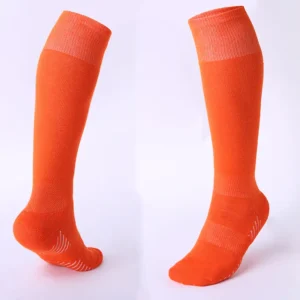
Sports such as soccer, field hockey, rugby, and skiing frequently use long socks to provide additional coverage around the lower leg.
Many team orders include:
- Team colors
- Player numbers
- Club names
- Sponsor branding
Medical and Support Applications
Some knee-high styles are developed for support-oriented applications where extended coverage is preferred.
These projects often focus on fit consistency, graduated compression requirements, and long-wear comfort.
Fashion Collections
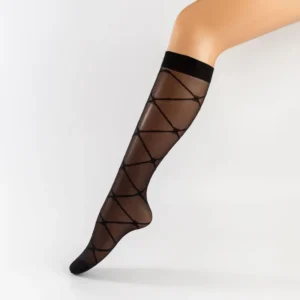
Knee-high socks remain popular in fashion collections because they create a strong visual element while offering more styling flexibility than shorter socks.
Popular designs include:
- Rib-knit textures
- Jacquard patterns
- Stripe designs
- Text logos
- Seasonal color collections
Material Options
Material selection affects comfort, stretch recovery, durability, and moisture management.
Cotton Blends
Cotton remains one of the most common choices for everyday knee-high socks. It offers softness, breathability, and a familiar feel that works well across uniform and lifestyle products.
Wool Blends
Wool blends provide additional warmth and moisture regulation, making them suitable for outdoor use and colder climates.
Nylon and Performance Fibers
Nylon helps improve abrasion resistance and shape retention. It is commonly blended with cotton or wool to increase durability and reduce deformation over time.
Bamboo and Specialty Fibers
Some brands choose bamboo or regenerated fibers when softness, moisture management, or sustainability goals are part of the product strategy.
Knitting Structures and Design Features
The visual appearance of a sock is not determined by color alone. Knitting structures play a major role in fit, comfort, and product identity.
Rib Knit Construction
Rib-knit structures provide natural elasticity and are widely used in cuffs and leg sections where stretch recovery is important.
Jacquard Designs
Jacquard knitting allows logos, graphics, and patterns to become part of the sock itself rather than being added afterward.
This approach is often preferred for team programs, school uniforms, and retail collections because the design remains integrated into the fabric.
Mesh Ventilation Zones
Mesh structures can be incorporated into selected areas to improve airflow without affecting overall coverage.
Reinforced Sole Areas
Additional reinforcement can be added to the heel, toe, and sole to improve durability in high-friction areas.
Logo and Branding Options
Custom knee-high socks provide a large decoration area compared to shorter sock styles.
Common branding methods include:
- Jacquard logos
- Knitted text
- Embroidery
- Stripe layouts
- Custom color blocking
The most suitable option depends on artwork complexity, budget, and intended production volume.
Things to Consider Before Ordering Custom Knee-High Socks
The most successful projects usually start with a clear understanding of how the socks will be used.
Before requesting samples, consider:
- Intended wearer
- Target calf fit
- Material preference
- Branding method
- Packaging requirements
- Expected reorder frequency
These decisions often have a greater impact on long-term satisfaction than simply choosing a design.
Why Brands Choose SocksMaven
SocksMaven focuses on custom sock manufacturing rather than off-the-shelf inventory.
We support projects ranging from small development runs to large repeat-production programs, helping brands maintain consistent sizing, reliable color matching, and practical customization options throughout the ordering process.
If you’re planning a knee-high sock program for uniforms, sports teams, retail collections, or branded merchandise, starting with the right construction and fit specifications can make reordering much easier later.
 Skip to content