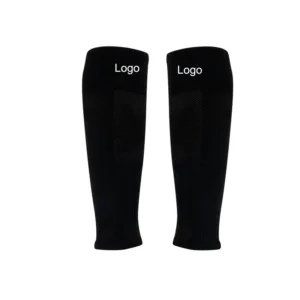
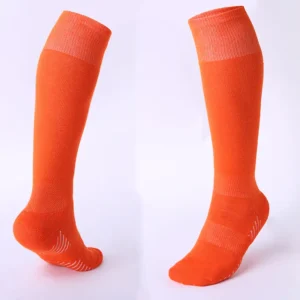
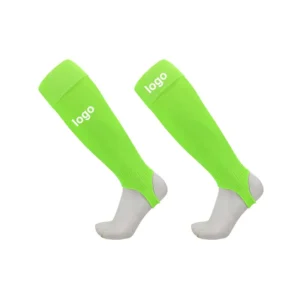
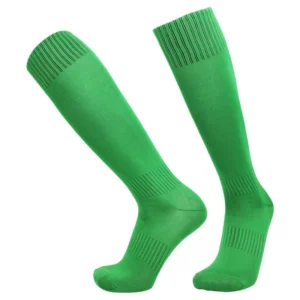
Custom Soccer Socks Built for Teams, Clubs, and Sports Brands
Soccer socks are one of the hardest-working pieces of a team’s kit. Players spend long periods sprinting, changing direction, accelerating, and stopping inside tight-fitting cleats, which places constant stress on the foot, ankle, and lower leg.
For that reason, soccer socks are designed differently from everyday socks. Construction, fit, durability, and leg support often matter just as much as appearance.
At SocksMaven, we manufacture custom soccer socks for clubs, schools, academies, tournaments, sports brands, and bulk team programs that need consistent quality across repeat orders.
What Makes Soccer Socks Different From Regular Socks?
The biggest difference is purpose.
Regular socks are primarily designed for everyday comfort, while soccer socks must work together with cleats, shin guards, and team uniforms throughout training sessions and competitive matches.
Most soccer socks are built with:
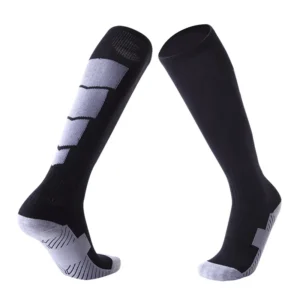
- Extended leg coverage
- Elastic rib structures around the calf
- Reinforced heel and toe areas
- Moisture-management yarn blends
- Durable construction for repeated washing and wear
These features help maintain fit while reducing distractions during play.
Soccer Sock Construction and High-Wear Areas
A soccer sock is made up of several functional sections, each serving a different purpose.
Leg and Calf Section
The upper section helps secure shin guards and maintain sock position throughout the match.
A properly engineered rib structure creates stability without excessive compression, allowing players to move naturally while reducing slippage.
Heel and Toe Zones
The heel and toe typically experience the highest levels of friction inside soccer cleats.
Reinforced yarns in these areas help improve durability and reduce premature wear, especially for players who train multiple times per week.
Footbed Area
The sole of the sock absorbs repeated impact during running, jumping, and directional changes.
Many team socks use cushioned constructions in the footbed to improve comfort without adding unnecessary bulk.
Why Cushioning Matters in Soccer Socks
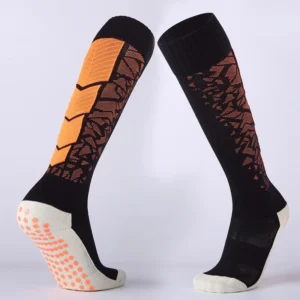
Many soccer socks use a terry cushion structure under the foot.
This construction adds looped yarn to high-impact areas while keeping the upper foot lighter and more breathable.
The result is a practical balance between:
- Impact absorption
- Durability
- Ventilation
- Cleat comfort
For players who spend several hours per week on the field, this construction often provides a noticeable improvement in long-term comfort.
Choosing the Right Materials for Soccer Socks
Material selection affects everything from moisture management to durability.
Most custom soccer socks use blended yarn constructions rather than a single fiber.
Cotton Blends
Cotton provides softness and everyday comfort. It is commonly used in training socks and recreational programs where comfort is a priority.
Polyester Blends
Polyester helps move moisture away from the skin and dries more quickly than traditional cotton-rich constructions.
Many competitive team socks use polyester-based blends for this reason.
Nylon Reinforcement
Nylon is frequently added to heel and toe zones because of its excellent abrasion resistance.
This helps extend product life in areas exposed to repeated friction.
Spandex
Spandex contributes stretch and recovery, helping the sock maintain a secure fit during movement and repeated washing.
Soccer Socks for Teams and Club Programs
Consistency matters when ordering team apparel.
Players expect replacement socks to match existing uniforms, and clubs often need additional inventory throughout a season.
Custom soccer socks can be produced for:
- Youth academies
- School teams
- University programs
- Amateur clubs
- Semi-professional organizations
- Professional training programs
Maintaining consistent colors, dimensions, and logo placement helps simplify future reorders.
Custom Design Options for Soccer Socks
Soccer socks often play an important role in team identity.
Common customization options include:
- Team colors
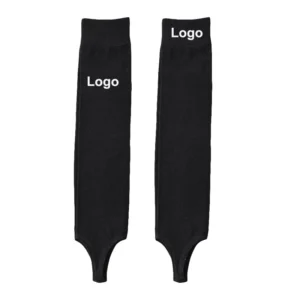
- Club logos
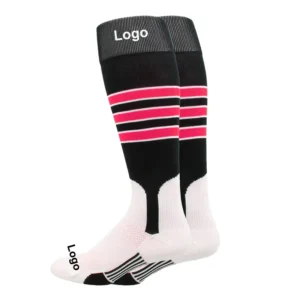
- Stripes and pattern layouts
- Sponsor graphics
- Player numbering
- Rib construction variations
- Footbed cushioning options
The most suitable customization method depends on artwork complexity, intended use, and order volume.
Choosing the Right Soccer Sock Length
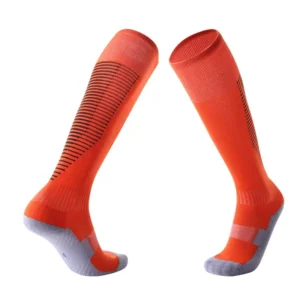
Most soccer programs prefer knee-high constructions because they work effectively with shin guards and provide a consistent team appearance.
However, different organizations may choose different lengths depending on age group, league requirements, and player preferences.
Available options typically include:
| Length | Typical Application |
| Crew | Training and casual team wear |
| Knee-High | Match play and competitive programs |
| Over-the-Calf | Advanced competition and full shin guard coverage |
The right choice depends on how the socks will be used rather than simply following current trends.
Bulk Soccer Socks for Repeat Orders
Many clubs and sports organizations place repeat orders throughout the year.
That makes consistency just as important as the initial design.
When sourcing custom soccer socks, buyers often focus on:
- Color consistency
- Reliable sizing
- Durable construction
- Repeat-order accuracy
- Packaging requirements
- Production reliability
A structured manufacturing process helps ensure future orders remain aligned with approved samples.
Why Teams Choose Custom Soccer Socks
Soccer socks combine practical performance with strong team visibility.
Unlike many promotional products, they become part of the uniform and are worn repeatedly throughout a season.
For clubs, academies, schools, and sports brands, custom soccer socks provide a simple way to strengthen team identity while maintaining comfort and functionality on the field.
Frequently Asked Questions
What materials are commonly used in soccer socks?
Most soccer socks use blended constructions that combine polyester, nylon, and spandex. Polyester helps manage moisture, nylon improves durability in high-friction areas, and spandex maintains stretch and fit. Some programs also use cotton-rich blends when comfort is prioritized over moisture management.
Why are soccer socks usually knee-high?
Knee-high designs help cover and stabilize shin guards while creating a consistent team appearance. They also provide additional lower-leg coverage, which is why most leagues, clubs, and school programs continue to use this length as the standard option.
Do soccer socks need cushioning?
Not every player prefers thick cushioning, but many soccer socks include cushioned footbed areas to help absorb impact and improve comfort inside cleats. The ideal level depends on personal preference, playing surface, and footwear fit.
How long do custom soccer socks typically last?
Durability depends on materials, training frequency, washing habits, and playing conditions. Reinforced heel and toe zones generally extend product life, especially for teams that train multiple times each week throughout the season.
Can custom soccer socks include team logos and sponsor branding?
Yes. Custom soccer socks can incorporate club logos, team colors, stripes, sponsor graphics, and other design elements. The most suitable decoration method depends on the complexity of the artwork and the intended production quantity.
 Skip to content