Skip to content

Your socks are worn out.
Some have holes. Some lost their partner.
You don’t want to throw them away, but they’re not wearable anymore.
Here’s exactly what to do with old socks so they don’t end up in the trash.
Takeaway: Reuse what you can. Recycle what you must. Next time, choose socks that last longer.
Don’t Throw Them Away Yet
Socks wear out faster than most clothing.
They deal with friction, sweat, and constant movement.
Textile waste now exceeds 90 million tons globally each year. Small items like socks contribute more than most people realize.
Reusing old socks cuts waste immediately.
Buying better socks cuts it long term.
Sort First – It Makes Everything Easier
Not every old sock should be reused the same way.
Holey but Still Soft
Best for:
- Dusting
- Shoe polishing
- Garage rags
Avoid stuffing projects. Holes create uneven padding.
Single Socks in Good Condition
Best for:
- Heat pads
- Shoe deodorizers
- Travel pouches
Keep them intact for enclosed uses.
Thick Athletic Socks
Best for:
- Draft blockers
- Packing fragile items
- Pet toys
Their density makes them better for padding.
100% Cotton or Wool
Only natural fiber socks can compost safely.
Blended fabrics with polyester or elastane should not be composted.
Check the label before deciding.
Easy Ways to Reuse Old Socks at Home
These ideas are simple, repeatable, and practical.
1. Turn Them Into Cleaning Mitts
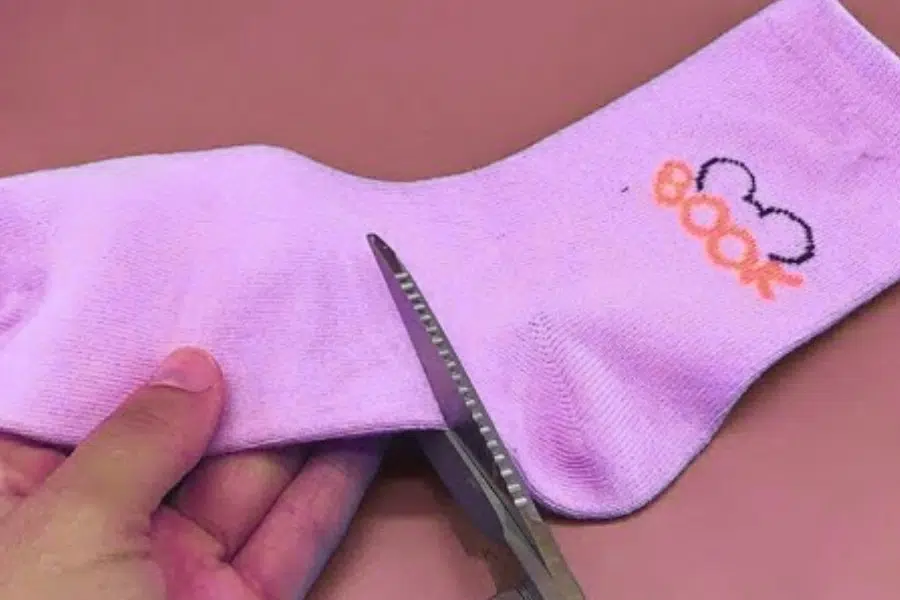
What you need
- One clean old sock
- Water or mild cleaner
How it works
Slide the sock over your hand.
Wipe blinds, baseboards, or window tracks.
The knit fabric traps dust better than paper towels.
Wash and reuse it dozens of times.
Real example: Cleaning plant leaves with a sock prevents tearing delicate surfaces.
2. Make a Reusable Heat Pad
Great for sore shoulders or cold evenings.
What you need
- One intact sock
- Dry rice or oats
- Thread or elastic
Steps
- Fill halfway with rice
- Tie or sew the top securely
- Microwave in 30-second intervals
Add a small cup of water to prevent scorching.
Never overheat.
Replace filling every few months if moisture builds up.
3. Deodorize Shoes Without Chemicals
Baking soda absorbs odor at the source.
Steps
- Fill two socks halfway with baking soda
- Tie tightly
- Place inside shoes overnight
Works well for gym sneakers or kids’ sports shoes.
Refresh baking soda every 2 to 3 months.
4. Protect Fragile Items During Storage
Skip bubble wrap.
Use socks to protect:
- Wine glasses
- Holiday ornaments
- Ceramic mugs
- Small tools
Slide the sock over the item before packing.
It cushions and prevents scratches.
5. Make Simple Pet Toys
Dogs love texture.
Cats respond to scent.
For dogs
- Knot two socks tightly
For cats
- Add a spoonful of catnip
- Tie securely
Supervise play to avoid loose threads.
Ideas You’ll Actually Use Again
Avoid projects that look good but never leave the drawer.
6. Block Drafts Under Doors
Cold air leaks under doors in winter.
Steps
- Fill a long sock with rice
- Sew or tie shut
- Place along the door base
It’s reusable and costs nothing.
7. Use Small Socks as Travel Organizers
Perfect for:
- Jewelry
- Earbuds
- Charging cables
- Memory cards
They prevent tangling and reduce plastic pouch use.
Parents often reuse kids’ outgrown socks for this.
8. Use as Soft Garden Ties
Cut socks into strips.
Tie tomato plants or vines loosely.
The stretch protects stems better than plastic ties.
When It’s Time to Let Them Go
Sometimes reuse isn’t practical.
Donate If Wearable
Lightly worn socks can go to local donation centers.
Use Textile Recycling Programs
Many recycling programs accept worn textiles.
Confirm fiber composition first.
Compost Only Natural Fiber Socks
Cotton and wool break down.
Synthetic blends create microplastics.
If unsure, skip composting.
The Real Fix – Start With Better Socks
Reuse helps.
Durability prevents waste from the beginning.
Low-quality socks often fail because:
- Heels lack reinforcement
- Yarn density is too low
- Cheap blends lose elasticity quickly
At SocksMaven, reinforced heel and toe construction improves wear cycles.
Higher-quality materials reduce early breakdown.
For brands, teams, and event organizers, durable custom socks mean:
- Fewer replacements
- Better long-term value
- Reduced textile waste
- Stronger brand perception
Sustainability starts with smarter construction.
Quality Socks Last Longer – Here’s Why
Stronger yarn structure resists friction.
Balanced blends maintain elasticity.
Better weaving improves durability.
Since 1997, SocksMaven has focused on quality and ethical production.
- OEKO-TEX and SEDEX compliant manufacturing
- Durable weaving technology
- Free custom sample support
- Flexible order quantities
- Global shipping options
Longer product life reduces environmental impact more effectively than constant repurchasing.
Reuse extends life.
Quality extends it further.
What To Do Today
Open your sock drawer.
- Sort your old socks
- Reuse at least three pairs
- Recycle responsibly
And when it’s time to replace them, choose socks designed to last.
That’s the simplest way to reduce waste without sacrificing comfort.
FAQ
Can old socks be recycled?
Yes, many textile recycling programs accept old socks.
Make sure they are clean and check fiber content first.
Natural fibers and blends are usually accepted in textile recycling bins.
Can you compost old socks?
Only if they are made from 100% natural fibers like cotton or wool.
Socks that contain polyester, nylon, or elastane should not be composted because they break down into microplastics.
What is the best way to reuse old socks?
The most practical uses are cleaning mitts, shoe deodorizers, heat pads, and packing fragile items.
These options require no sewing skills and can be reused multiple times.
How do you make a heat pad from old socks?
Fill a clean sock halfway with dry rice.
Tie or sew the end shut.
Microwave in 30-second intervals until warm.
Always avoid overheating.
Can you donate old socks?
Lightly worn socks can be donated if they are clean and still wearable.
Heavily worn or damaged socks are better suited for reuse or textile recycling.
Why do socks wear out so quickly?
Socks experience constant friction and moisture.
Low-density yarns and weak heel construction shorten lifespan.
Higher-quality materials and reinforced heels extend wear cycles.