Skip to content

You can wear the right shoes and still end up with blisters, sweaty feet, or socks that slide down. Sock pairing fixes most of that fast.
Takeaway – match sock height to the shoe opening, then match cushioning and fabric to friction and sweat.
Start here – pick the right sock in 30 seconds
What you need
- Shoe type and collar height
- Your day – office, workouts, travel, outdoors
- Your top problem – blisters, slipping, heat, cold
How it works
- Lower-cut shoes need lower-cut socks that stay put.
- Higher-cut shoes need socks that protect the ankle and shin.
- More movement means more friction – add targeted cushion and moisture control.
When to choose this option
Use this check when you’re packing, buying new shoes, or rebuilding your sock drawer.
Best sock materials for sweat, heat, and comfort
What you need
Pick one material direction based on sweat and temperature.
How it works
- Cotton-rich – comfortable for light days, but it holds moisture longer.
- Synthetic blends – dry fast and work well for sports and hot weather.
- Merino wool – steady temperature and odor control for long wear and travel.
- Bamboo blends – soft feel and strong moisture control for daily comfort.
When to choose this option
- If you sweat a lot, lean toward synthetic blends or merino wool.
- If you want a softer everyday feel, bamboo blends are a solid pick.
Sock cushioning – light vs. medium vs. heavy
What you need
Use cushion to manage impact, not to “fill space.”
How it works
- Light cushion – thin feel, best for dress shoes and snug sneakers.
- Medium cushion – everyday comfort for walking and training.
- Heavy cushion – long shifts, work boots, and cold-weather boots.
When to choose this option
If shoes feel tight already, stay light or medium. Cushion that’s too thick can make fit worse and increase rubbing.
Best socks for each shoe type
| Shoe type | Best sock height | Cushion | Best for |
|---|---|---|---|
| Loafers, slip-ons | No-show or low-cut liner | Light | Clean look, less heel rub |
| Sneakers, trainers | Ankle or quarter | Light to medium | Daily walking, commuting |
| Running shoes | Ankle tab or quarter | Medium, targeted | Blister defense, sweat control |
| Dress shoes | Mid-calf or over-the-calf | Light | Smooth fit, polished look |
| Work boots | Crew | Medium to heavy | Support, durability |
| Hiking boots | Crew | Medium | Moisture control, friction control |
| Cleats | Crew | Medium | Secure fit, stud pressure relief |
| Winter boots | Crew | Medium to heavy | Warmth, long wear |
Best socks for loafers and slip-ons
What you need
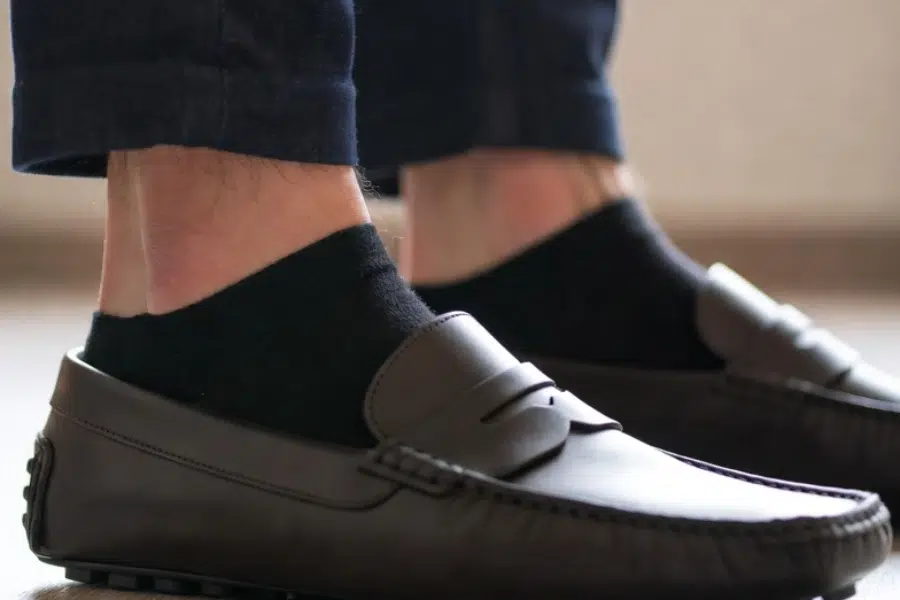
- No-show or low-cut liner socks
- A secure heel that won’t slide
How it works
Loafers expose the heel and ankle. A no-show liner reduces sweat and friction while keeping the sock out of sight.
When to choose this option
- Warm weather, office casual, travel days
- Everyday example – a full day walking in loafers. A grippy-heel liner prevents that back-of-heel burn.
Best socks for sneakers and trainers
What you need
- Ankle or quarter socks
- Light to medium cushioning in the heel and forefoot
How it works
Sneakers flex and your foot moves inside the shoe. An ankle or quarter sock protects the collar area and reduces rubbing.
When to choose this option
- Commuting, campus days, city walks
- Everyday example – standing all day at a convention in sneakers. Medium cushion reduces foot fatigue by mid-afternoon.
Best socks for running shoes
What you need
- Ankle-tab or quarter socks
- Targeted cushioning in heel and forefoot
- Fast drying fabric
How it works
Running repeats impact in the same zones. Targeted cushion reduces hot spots, and fast drying fabric helps stop blisters that start with sweat.
When to choose this option
- Running, treadmill, HIIT
- Clear fix – if your heel gets rubbed raw, switch to an ankle-tab sock that covers the heel collar.
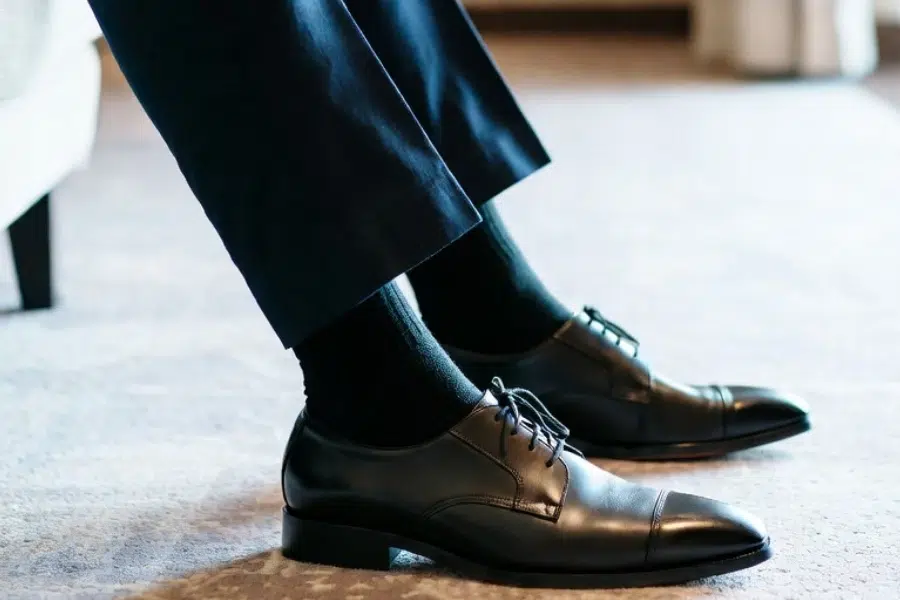
Best socks for dress shoes
What you need
- Mid-calf or over-the-calf socks
- A smooth, thin sock with a clean toe seam
How it works
Dress shoes run tighter and don’t hide bulky seams. A thin sock keeps the fit clean and helps avoid toe pressure.
When to choose this option
- Interviews, weddings, client meetings
- Style rule – match socks closer to your pants than your shoes for a longer, cleaner line.
Best socks for work boots
What you need
- Crew socks with reinforced heel and toe
- Medium to heavy cushion, based on shift length
How it works
Boots are stiff and hard floors add impact. Reinforced zones slow wear, and cushion reduces shock through the heel.
When to choose this option
- Warehouses, job sites, long standing shifts
- Clear fix – if the ball of your foot aches by lunch, increase cushion one level.
Best socks for hiking boots
What you need
- Crew socks with moisture control
- Smooth toe seams
- Medium cushioning
How it works
Hiking adds sweat plus friction on climbs and descents. Moisture control reduces blister risk, and smooth seams help during downhill toe pressure.
When to choose this option
- Day hikes, outdoor travel, boot break-in periods
- Everyday example – breaking in new hiking boots. Medium cushion and moisture control reduces hotspots on mile one.
Best socks for cleats
What you need
- Crew socks with a snug cuff
- Medium cushioning in the footbed
How it works
Cleats fit tighter and studs create pressure points. Medium cushion helps without changing the fit the way thick socks can.
When to choose this option
- Training sessions and tournament weekends
- Clear fix – if socks slide down during sprints, look for a tighter cuff and a shaped heel.
Best socks for winter boots
What you need
- Crew socks with warmth and moisture control
- Medium to heavy cushioning depending on boot space
How it works
Warmth matters, but sweat makes feet colder once it sits. Warm socks that also manage moisture stay comfortable longer.
When to choose this option
- Cold commutes, outdoor events, winter travel
- Simple rule – if your boots fit snug, choose warmer fabric over thicker cushion.
Mistakes that cause blisters and smelly feet
What you need
Avoid these fast traps.
How it works
- Going sockless in loafers or boat shoes – sweat and friction rise fast.
- Wearing thick socks in tight shoes – pressure points increase rubbing.
- Repeating damp socks – odor builds and skin softens, making blisters more likely.
- Choosing “soft only” fabrics for sports – comfort feels nice, but drying speed matters more.
When to choose this option
If your feet feel fine for one hour, then fall apart, one of these mistakes is usually the reason.
Fix sock problems fast – 3 quick steps
What you need
Change one thing at a time so you know what worked.
How it works
- If you get blisters – move to faster-drying fabric and add targeted cushion.
- If socks slip – switch to a shaped heel and tighter cuff, then reduce excess fabric.
- If feet run hot – switch to a lighter cushion and a fast-drying blend.
When to choose this option
Use this after you buy new shoes or change your daily routine.
Need custom socks for a team or brand
If you’re buying for yourself, this guide helps you build a reliable rotation. If you’re buying for a team, brand, or event, you also need the same fit and performance across every pair.
SocksMaven builds custom socks using the same pairing rules – then turns them into repeatable specs.
- Sports teams often choose crew athletic socks with targeted cushioning and sweat control.
- Corporate gifts usually work best as comfortable crew socks with a clean logo and easy sizing.
- Retail drops often mix patterns or seasonal themes while keeping the base fit consistent.
SocksMaven supports free design mockups and can provide samples, which helps you confirm sock height, cushioning, and fabric feel before full production. SocksMaven also ships globally with multiple options, including DDP for smoother delivery.
What to do next
Pick the two shoe types you wear most and build around those pairings first.
If you’re planning a custom run for a team kit, brand drop, or corporate order, SocksMaven can help you lock the height, cushion level, and materials so the socks match the shoes they’re made for.