Skip to content

If your socks are still wearable, donate them.
If the fabric is intact but stretched, recycle them.
If they’re contaminated or falling apart, dispose of them properly.
That’s the simple rule. Here’s how to apply it correctly.
Before You Throw Them Away
Textile waste is a growing issue. The fashion industry generates roughly 92 million tons of textile waste each year, and less than 15 percent is recycled.
When socks end up in landfills, they:
- Waste the energy used to produce them
- Release methane if made from natural fibers
- Shed microfibers if made from synthetics
Extending use is always better than immediate disposal.
First – Sort Them in 5 Minutes
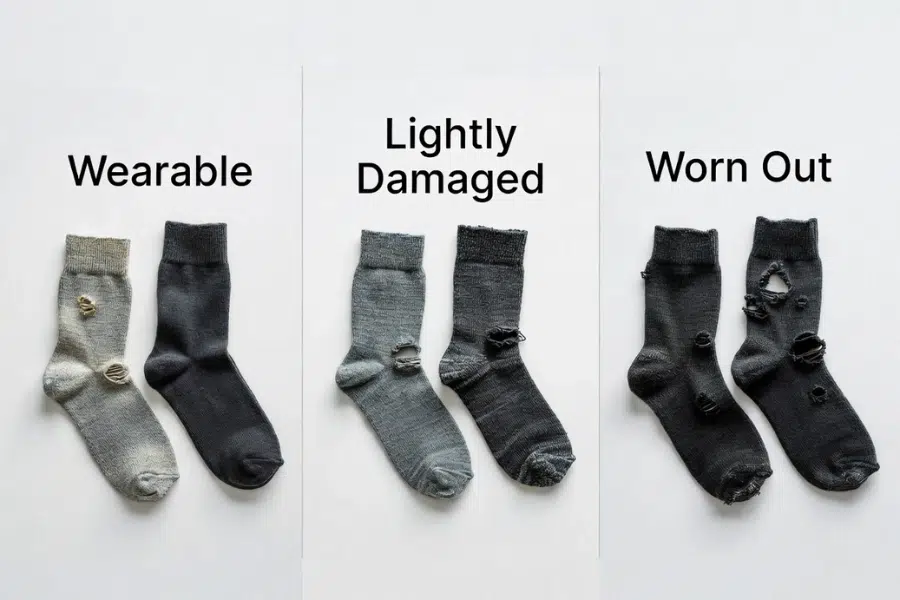
Before making any decision, separate your old socks into three groups.
Wearable
- No holes
- Good elasticity
- Clean and intact
Lightly Damaged
- Small holes
- Slight stretching
- Minor fading
Worn-Out or Unsafe
- Large tears
- Thin fabric
- Mold or chemical contamination
This step prevents unnecessary waste.
Donate If They Still Work
Donate socks that are clean and wearable.
Good options include:
- Local shelters
- Thrift stores
- Clothing donation centers
Example – holiday socks worn once or promotional event socks in good condition are perfect for donation.
Do not donate heavily damaged items. That only creates extra sorting work.
Recycle When They Can’t Be Worn
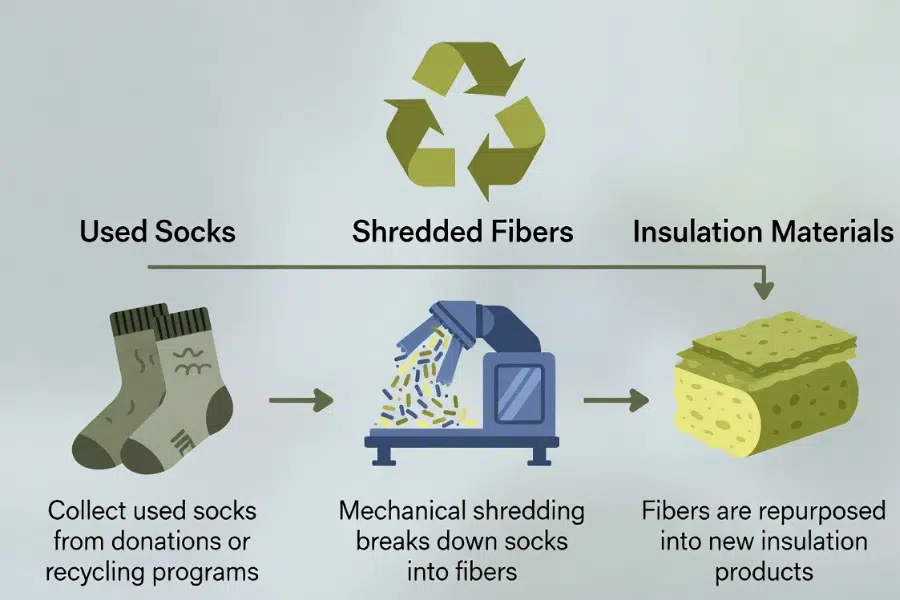
If socks are no longer wearable but still mostly fabric, recycling is the next best option.
Textile recycling breaks garments into fibers. Most recycled socks become:
- Insulation
- Cleaning cloths
- Carpet padding
- Fiber stuffing
Closed-loop recycling into new socks is uncommon because most socks use blended fibers.
Choose recycling when the material is intact but unsuitable for wear.
Why Some Socks Are Hard to Recycle
Most socks contain:
- Cotton
- Polyester
- Elastane
Elastane improves stretch but makes fiber separation difficult. That limits true garment-to-garment recycling.
Recycling often becomes downcycling, meaning the material turns into lower-grade products rather than new clothing.
This is why durability matters from the start.
Where You Can Drop Them Off
Several programs accept socks of any brand:
- H&M garment collection
- TerraCycle mail-in boxes
- Smartwool Second Cut Project
- Subset recycling program
- Nice Laundry take-back program
You can also search local textile recycling centers in your area.
Or Just Reuse Them at Home
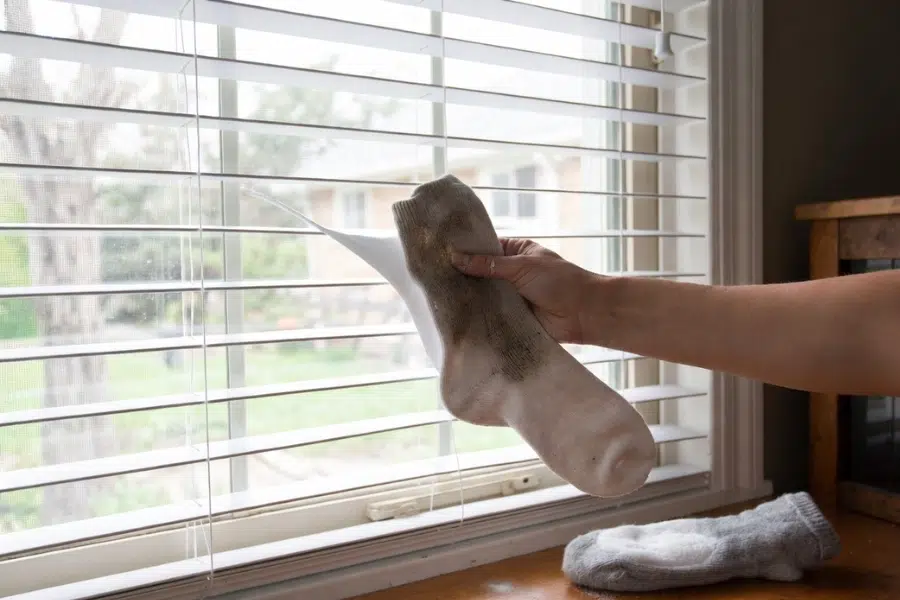
Repurposing works well for single socks or lightly damaged pairs.
5 Simple Uses
- Cleaning baseboards or blinds
- Dusting ceiling fans
- Filling with baking soda for odor control
- Tying garden plants
- Making reusable dust mitts
Example – a thick athletic sock often works better than disposable wipes for cleaning window tracks.
Reuse costs nothing and extends product life immediately.
Sometimes Throwing Them Away Is Okay
Dispose of socks if they:
- Contain mold
- Are soaked in chemicals
- Pose hygiene risks
Recycling facilities cannot process contaminated textiles safely.
Be practical. Not every item can be saved.
The Best Way to Reduce Waste
Recycling helps. Donation helps. Repurposing helps.
But the most effective strategy is buying socks that last longer.
Frequent replacement increases textile waste. Poor stitching and low-quality yarn break down quickly.
SocksMaven has focused on durable custom sock manufacturing since 1997. By using certified OEKO-TEX materials, reinforced stress points, and high-density knitting, SocksMaven prioritizes longevity.
Longer-lasting socks reduce replacement frequency. That lowers overall waste.
Buying New Socks After Recycling
If you’re replacing old pairs, look for:
- Reinforced heels and toes
- Durable yarn blends
- Breathable but strong construction
- Certified safe materials
Custom socks from SocksMaven allow brands and teams to control fiber selection and production quality without strict MOQ requirements. Smaller production runs also reduce overstock and unnecessary disposal.
Recycling manages waste. Smart purchasing prevents it.
Use This Simple 3-Step Rule
- Check structure – Is the fabric intact
- Check hygiene – Is it clean and safe
- Choose the highest-value option – Donate first, recycle second, dispose last
Keep the hierarchy clear.
Quick Reference Guide
| Condition | Best Action |
|---|---|
| Clean and wearable | Donate |
| Minor damage | Repurpose |
| Intact but not wearable | Recycle |
| Contaminated | Dispose responsibly |
Frequently Asked Questions
Can socks really be recycled
Yes, but most are downcycled into insulation or industrial fibers because of mixed materials.
Where can I recycle socks near me
Check local textile recycling centers or brand take-back programs such as H&M or TerraCycle.
Is it better to donate or recycle
Donate if the socks are wearable. Recycle when they can’t be worn but remain fabric-intact.
Are synthetic socks recyclable
Yes, but blends with elastane are difficult to separate, so they are usually downcycled rather than remade into clothing.
One Simple Rule to Remember
Donate wearable socks.
Recycle intact fabric.
Dispose only when necessary.
And next time you buy, choose durability first.
That decision reduces waste more than any recycling program ever will.