Skip to content

Cold floors and long hours indoors make thin socks uncomfortable fast. The right warm socks for home should keep heat steady, stay dry, and feel comfortable all day. This guide shows exactly what to choose and why.
Warm sock types that actually work at home
Not all warm socks perform well indoors. These three types are the most reliable for home wear.
Medium-thickness insulated socks
These socks keep warmth steady without feeling bulky. They hold heat while allowing airflow.
Best for:
- Hardwood or tile floors
- Moving around the house
- Wearing all day
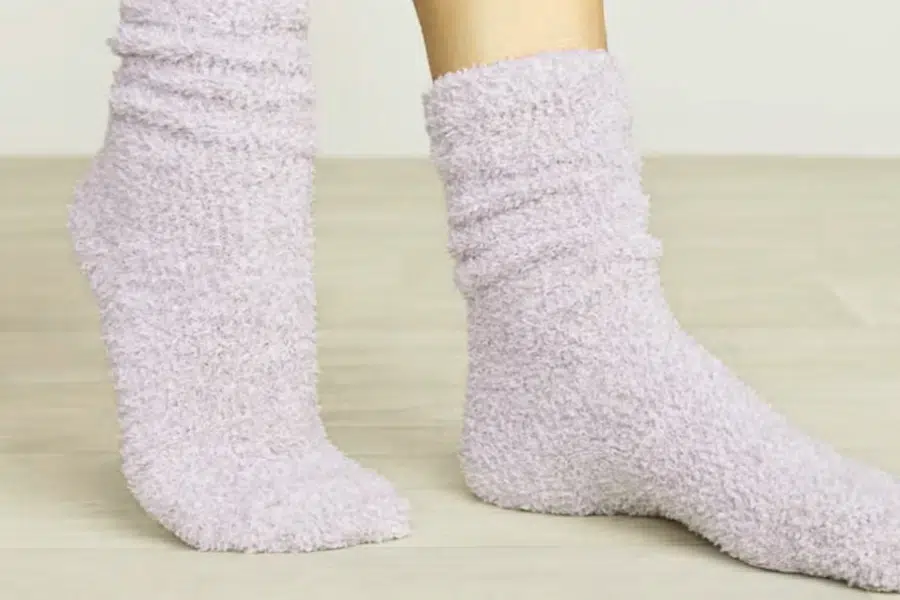
Soft inner-brushed socks
Brushed yarns trap warm air close to the skin. They feel warmer during long periods of rest.
Best for:
- Couch time
- Reading or watching TV
- Early mornings and evenings
Wool or wool-blend socks
Wool regulates temperature naturally and stays comfortable over long wear.
Best for:
- Cold homes with limited heating
- Extended indoor wear
- People with consistently cold feet
Why some socks feel warmer at home than others
Warm socks work by balancing insulation and moisture control. Heat stays near the skin while moisture moves away.
At home, feet often switch between walking and resting. Socks that trap sweat feel warm at first, then cold later.
That’s why yarn structure and knit design matter more than thickness alone.
The materials that keep feet warm indoors
Material choice directly affects indoor comfort.
Wool and merino blends
Wool insulates well and handles moisture naturally. Merino wool adds softness and flexibility.
Choose wool blends if you want:
- Stable warmth
- Less odor buildup
- Comfort over long hours
Synthetic blends
Synthetic fibers dry faster and keep their shape after repeated washing.
Choose synthetics if you want:
- Easy care
- Consistent fit
- Lightweight warmth
At SocksMaven, warm home socks often use blended yarns to balance softness, durability, and insulation.
Why thicker socks don’t always feel warmer
Thick socks often trap moisture. That moisture cools feet over time.
Instead of bulk, focus on:
- Knit density
- Yarn structure
- Inner surface texture
A well-designed medium-thickness sock usually feels warmer indoors than a bulky one.
How sock fit affects warmth at home
Fit plays a bigger role in warmth than most people expect.
Follow these rules:
- Snug fit without pressure
- No extra fabric folding underfoot
- Cuffs that stay up without squeezing
Loose socks lose heat. Tight socks restrict circulation.
Choosing the right socks for daily home moments
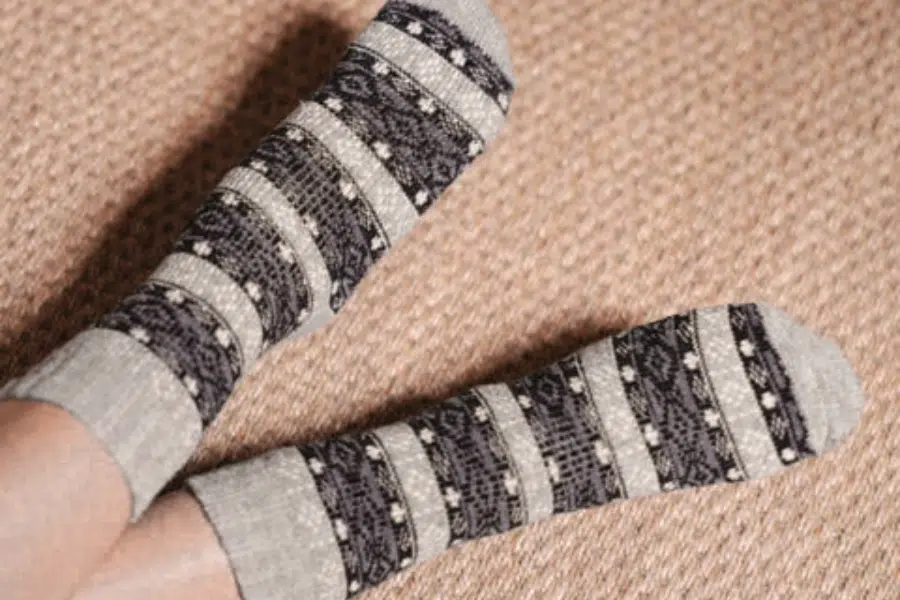
Different moments at home need different sock behavior.
- Morning routines – breathable insulation for movement
- Desk work – steady warmth without sweat
- Evenings – soft inner texture for comfort
Socks designed for indoor routines perform better than outdoor-focused styles.
When custom warm socks are worth considering
Custom socks aren’t only about branding. They let you control warmth, fit, and comfort.
Custom warm socks make sense for:
- Employee winter gifts
- Holiday homewear collections
- Personal small-batch designs
SocksMaven supports flexible quantities, material selection, and global delivery without rigid MOQ limits.
Simple care tips to keep socks warm longer
Warm socks last longer with basic care.
- Wash in cold or warm water
- Skip fabric softener
- Air dry or use low heat
Rotate pairs to maintain insulation.
What to do next
If your feet feel cold at home, start with medium-thickness, breathable socks made from well-balanced blends. Wear one pair through a full indoor day, note how they feel, and build from there.