Skip to content

Wearing the wrong type of dance socks changes how you move.
Too much grip ruins your turns.
Too little cushion hurts after long rehearsals.
The right pair supports your style, floor, and impact level.
Simple rule
Match your socks to how you move and where you dance.
What Are Dance Socks
Dance socks are performance socks made for movement control.
They usually:
- Fit closer than regular socks
- Manage sweat better
- Add cushion only where needed
- Offer optional grip
They help you balance friction and glide.
Choose Based on Your Dance Style
Different styles demand different sock construction.
Ballet – Keep It Thin and Precise
Best choice:
- Thin fabric
- Snug ankle fit
- Minimal cushion
- Full-foot or convertible
Ballet needs floor sensitivity. Thick socks reduce toe control during barre or center work.
Studios often require pink or white ankle socks for uniformity.
Hip-Hop – Protect Against Impact
Best choice:
- Medium cushioning
- Reinforced heel and toe
- Grip only if needed
Hip-hop involves jumps and repeated impact.
After a 90-minute hardwood rehearsal, dancers without heel padding often feel soreness. Cushioning reduces that strain.
If you rehearse in sneakers, choose thinner performance blends. If dancing on open studio floors, choose more cushion.
Jazz and Contemporary – Let Yourself Glide
Best choice:
- Lightweight build
- Low grip
- Flexible stretch
These styles require smooth turns and floor transitions.
Too much grip interrupts spins. Thin socks help maintain clean movement on Marley flooring.

Tap – Stay Thin
Best choice:
- Thin construction
- Seamless toe
- Moisture control
Tap shoes fit tight. Extra bulk causes discomfort quickly.
Irish Dance – Follow Tradition
Best choice:
- Thick knee-high socks
- Uniform white color
These socks focus on appearance and tradition rather than movement mechanics.
How Much Grip Do You Really Need

Grip changes how your foot interacts with the floor.
- High grip gives stability
- Low grip allows smooth turning
- No grip offers maximum slide
If choreography includes sliding footwork, avoid silicone soles.
If training involves stability drills, grip socks may help.
When to Choose Thin or Cushioned Socks
Cushion should match impact level.
- Low cushion for precision styles
- Medium cushion for mixed routines
- Higher cushion for heavy impact
Example
Hip-hop dancers rehearsing five days per week benefit from heel reinforcement. Contemporary dancers performing floor work often prefer thinner socks.
What Material Works Best for Dance
Fabric affects comfort and performance.
Avoid 100 percent cotton for intense sessions. Cotton absorbs sweat and stays wet.
Better options include:
- Polyester blends
- Merino blends
- Stretch fibers for shape retention
At SocksMaven, performance categories often use moisture-managing yarn blends designed for active movement. Breathability and durability both matter when socks go through repeated rehearsals.
What Happens in Real Practice
Real studio conditions vary.
Hardwood floor
Friction builds fast. Medium cushion with low grip works well.
Marley surface
Thin socks with minimal grip allow smoother turns.
Long competition day
Moisture-wicking fibers reduce blister risk during extended wear.
Youth ballet exams
Uniform length and color are just as important as function.
Do You Actually Need Dance Socks
You can dance barefoot.
But socks provide:
- Hygiene protection
- Reduced blister risk
- Controlled friction
- Comfort during long practice
For dancers training multiple times per week, socks help reduce skin irritation and foot fatigue.
For Dance Teams and Studios
Socks also support identity.
Matching socks improve:
- Stage cohesion
- Team presentation
- Studio branding
Many studios now create custom dance socks for competitions.
SocksMaven supports dance schools and teams with:
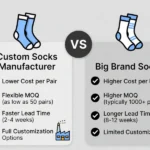
- Flexible order quantities
- Custom logos or names
- Performance yarn options
- Global shipping including express delivery
Since 1997, SocksMaven has focused on durable, ethically sourced sock production with OEKO-TEX compliant materials. For teams that rehearse frequently, durability matters as much as appearance.
Custom crew socks often double as team merchandise for parents and supporters.
Quick Comparison
| Style | Cushion | Grip | Best Surface |
|---|---|---|---|
| Ballet | Low | Low | Studio floor |
| Hip-Hop | Medium | Optional | Hardwood |
| Jazz | Low | Low | Marley |
| Tap | Low | Low | With tap shoes |
| Irish | High | Low | Stage |
FAQ
Q:What types of dance socks do dancers wear
Dancers wear ballet socks, hip-hop socks, jazz socks, tap socks, Irish poodle socks, and grip socks. The choice depends on style and floor surface.
Q:Are grip socks good for dance
Grip socks help with stability training but can interfere with spins and sliding choreography.
Q:Can I dance in regular socks
You can, but regular cotton socks absorb sweat and lack performance cushioning. They increase blister risk during long sessions.
Q:Should dance socks be thick or thin
Thin socks work best for precision styles. Thicker socks are better for high-impact styles like hip-hop.
How to Make Your Final Choice
- Identify your dance style
- Check your studio floor type
- Decide if you need grip or glide
- Match cushion to impact level
- Choose performance fabric
Thin for control. Cushion for protection. Grip only when necessary.
If you’re equipping a team or building studio branding, custom performance socks from SocksMaven give you flexibility without strict minimum orders.