Skip to content
How to choose the right option for your needs

Choosing socks feels simple until comfort drops, sweat builds up, or blisters appear. The real difference between custom socks and regular socks isn’t just how they look. It’s how they’re built, what they handle well, and whether they match how you actually use them.
If you’re deciding between custom socks and regular socks, this guide gives you a clear answer without the noise.
Quick takeaway
There’s no universally better sock. The right choice depends on how often you wear them, how demanding your day is, and whether performance or convenience matters more.
The two sock types you’ll be choosing between
What regular socks are designed for
Regular socks are mass-produced for everyday use. They focus on basic comfort, warmth, and easy replacement.
Most are made from cotton, wool, polyester, or blended fabrics. For office wear, casual routines, or short daily use, regular socks cover the essentials with minimal effort.
What custom socks are designed for
Custom socks are built around specific use cases rather than general wear. Design decisions start with how the socks will be worn, not just how they look.
They allow control over fabric choice, fit details, functional features, and visual design. At SocksMaven, most projects begin by defining usage before any colors or graphics are chosen.
Where custom socks and regular socks really differ
Materials and fabrics that affect comfort and wear

Regular socks rely on familiar materials that feel soft but often trap moisture during long wear.
Custom socks use higher-performance options such as
- Lycra or spandex for stretch and shape retention
- Combed cotton for durability
- Bamboo fiber for breathability
- Merino wool for temperature control
Key difference
Custom socks are engineered for moisture control, elasticity, and long-term wear, not just comfort out of the package.
Design and personalization options
Regular socks usually come in standard colors and simple patterns with limited variation.
Custom socks allow logos, text, controlled color palettes, and purpose-driven patterns. In most cases, design supports function rather than standing alone as decoration.
Comfort and fit in real use
Regular socks follow standard sizing that works for most feet but adapts poorly to long wear or movement.
Custom socks often include adjusted cuts, arch support, seamless toes, and targeted cushioning. These details reduce friction and pressure during extended use, which is why construction matters as much as appearance at SocksMaven.
Performance during activity

Regular socks handle low-impact, everyday activity well.
Custom socks are built for situations that demand more
- Moisture management
- Odor control
- Friction reduction
- Blister prevention
- Support during movement and recovery
The performance gap becomes obvious during sports, long shifts, or physically demanding work.
Durability over time
Regular socks often lose shape as fabric thins and elastic stretches.
Custom socks usually include reinforced heels and toes, stronger stitching, and better elastic recovery. These features help the socks keep their fit and function after repeated wear and washing.
Cost, timing, and production considerations
Cost vs long-term value
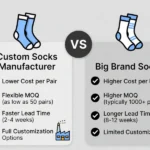
Regular socks cost less upfront and are easy to replace. They make sense when budget and convenience come first.
Custom socks cost more initially because of better materials, functional construction, and smaller production runs. Fewer replacements and better performance often balance that cost over time.
Availability and lead time
Regular socks are available immediately in stores or online.
Custom socks require production time. Orders are planned, manufactured, and delivered on a set timeline, which matters for teams, events, or campaigns.
Sustainability and sourcing
Mass-produced socks don’t always prioritize environmental or ethical standards.
Custom production can offer options like organic cotton, bamboo fiber, and responsible manufacturing. This gives buyers more control over how and where their socks are made.
How to decide which option fits your situation
Choose regular socks if you
- Need everyday basics
- Have a limited budget
- Need socks immediately
- Don’t require personalization
Choose custom socks if you
- Need socks for branding, teams, or events
- Participate in high-intensity activities
- Want specific materials or functional features
- Care about sustainability and sourcing
- Want durability that holds up to frequent wear
What to check before choosing any socks
- Purpose such as daily wear, sports, or special use
- Fabric content and moisture behavior
- Interior construction including seams and padding
- Fit that feels snug without pinching
- Durability features like reinforced zones
These are the same standards used when developing custom solutions at SocksMaven, regardless of design complexity.
FAQ
What’s the main difference between custom socks and regular socks?
The main difference is purpose. Custom socks are designed around specific needs with better materials, targeted support, and personalized features. Regular socks are mass-produced for general use and focus on affordability and basic comfort rather than performance.
Why do custom socks cost more?
Custom socks cost more due to higher-quality materials, smaller production runs, and more precise construction. The price also reflects customization and quality control, which improves durability, fit, and performance compared to standard mass-produced socks.
Are custom socks suitable for daily wear?
Yes. Custom socks work well for daily wear, especially if you’re on your feet for long hours. They tend to maintain shape longer, manage moisture better, and feel more consistent over time than standard everyday socks.
Can regular socks be used for workouts?
They can be used, but they’re not ideal. Most regular socks lack moisture control, arch support, and targeted cushioning. This increases the chance of sweat buildup, friction, and blisters during longer or higher-intensity workouts.
How should socks fit properly?
Socks should feel snug without restricting circulation. Toes should move freely, the arch should feel lightly supported, and there should be no bunching at the heel or forefoot. Proper fit reduces friction and improves comfort.
Do custom socks need special care?
Care depends on the fabric. Most custom socks last longer with gentle washing and low-heat or air drying. This helps preserve elasticity, color, and overall fit across repeated wears.
What is the typical minimum order for custom socks?
Minimums vary by manufacturer. Some allow small orders of around 6 to 12 pairs, while larger or more complex designs usually require higher quantities, especially for corporate or promotional use.
How long does custom sock production take?
Production typically takes two to six weeks. This includes design approval, manufacturing, quality checks, and shipping. Larger orders or specialty materials may require additional lead time.
How do you start a custom sock project?
Start by defining how the socks will be used. Then choose the style, materials, sizing, and design. Once details are confirmed, production begins followed by quality checks and delivery.
Next step
If your needs are simple and short-term, regular socks are usually enough. If comfort, durability, or purpose matters more, custom socks give you better control over how your socks perform and last.
At SocksMaven, custom projects start with how the socks will be worn, not just how they look. Defining use, fabric, and fit first helps ensure the final product actually works in real life, whether it’s for daily wear, a team, or a specific activity.
If you’re considering custom socks, the next step is simple. Clarify your use case, then build from there.