Skip to content

Why winter warm socks matter more than you think
If your feet still feel cold even when you are wearing thick socks and winter shoes, the issue is usually not the temperature outside but the way your socks manage heat and moisture, because poorly chosen materials trap sweat instead of warmth and end up making your feet colder over time.
In cold environments, your body naturally prioritizes protecting vital organs, which reduces blood flow to your extremities and makes your feet the first place where discomfort appears, meaning that once your feet lose warmth, your overall comfort drops quickly even if the rest of your outfit is appropriate.
A well-designed pair of winter warm socks is not simply thicker or heavier, but carefully balanced to retain heat, release moisture, stay comfortable over long hours, and maintain structure after repeated wear, which is why choosing the right pair matters just as much as choosing the right jacket.
Understanding the science behind cold feet and related risks
When temperatures drop, your body constricts peripheral blood vessels to minimize heat loss, which leads to reduced circulation in your feet and a noticeable drop in temperature that can occur even during light outdoor exposure.
This natural response, while protective, creates conditions where cold and dampness combine to increase the risk of discomfort, numbness, and in more serious situations, issues such as frostbite or chilblains, especially when exposure is prolonged or footwear does not allow proper insulation.
For individuals with circulation-related conditions, including diabetes or vascular sensitivity, maintaining foot warmth becomes even more important, because reduced blood flow can amplify existing problems and slow recovery from cold exposure.
Beyond physical health, cold feet also affect how your body relaxes, since persistent discomfort can interfere with sleep quality and increase tension, which explains why something as simple as the right socks can significantly improve daily comfort during winter.
What actually makes winter socks warm and effective
Material selection determines real warmth
The effectiveness of winter socks depends far more on material performance than on thickness alone, because true warmth comes from the ability to trap heat while keeping moisture away from the skin.
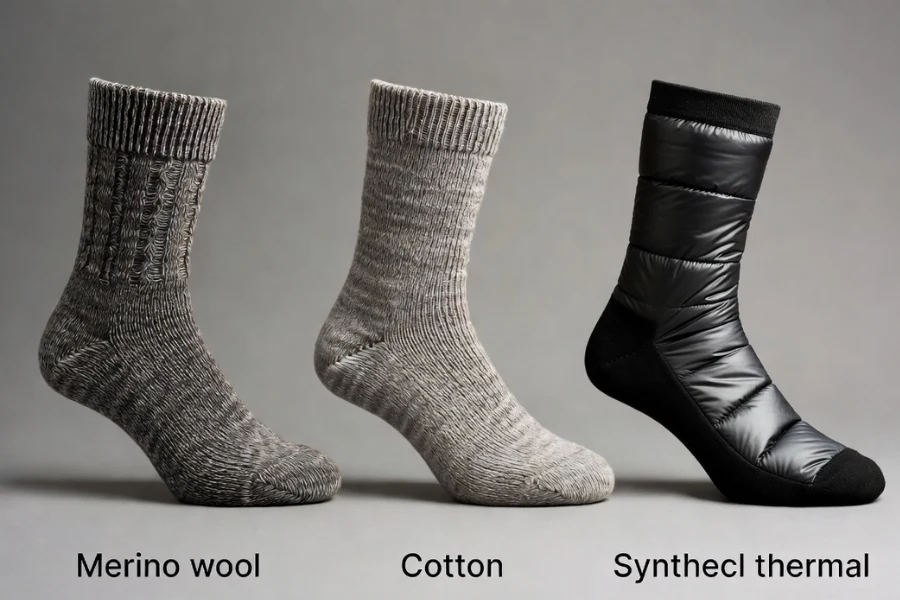
Merino wool remains the most reliable option due to its natural insulation, breathability, and ability to stay warm even when slightly damp, making it suitable for both outdoor activities and daily wear without causing irritation. Thermal blends that combine synthetic fibers such as acrylic, nylon, and elastane enhance durability and drying speed, which makes them more suitable for high-activity or wet conditions where moisture control is critical.
Fleece-lined constructions focus on heat retention and softness, which makes them ideal for indoor or low-movement environments, while bamboo-based fibers offer a lighter alternative for transitional conditions where moderate warmth and breathability are needed.
Cotton, despite being comfortable, absorbs moisture and holds it against the skin, which reduces insulation and often leads to cold feet, making it a poor choice for winter situations where dryness is essential.
Construction details improve performance quietly
The way a sock is constructed directly influences how it performs in real conditions, even when the material appears similar.
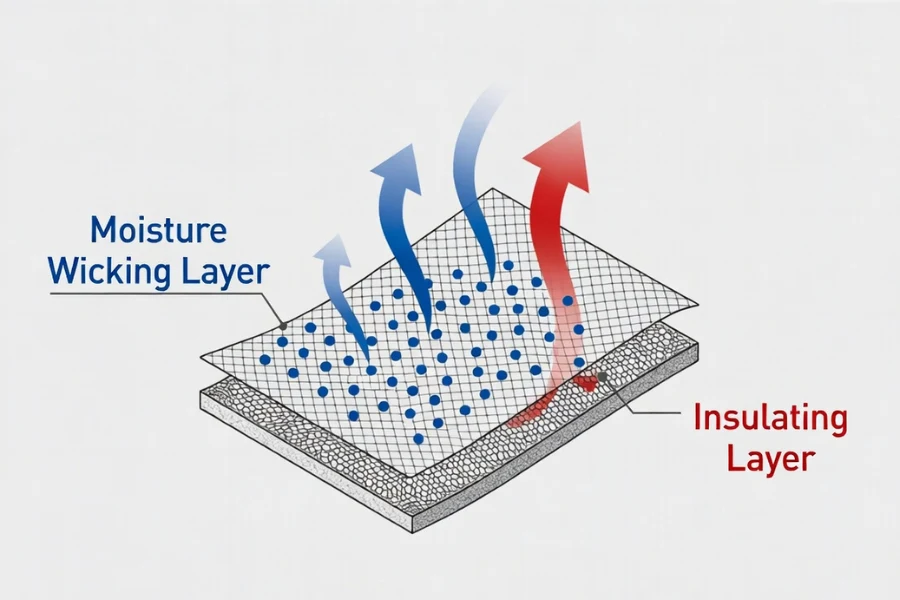
Double-layer designs allow the inner layer to move moisture away from the skin while the outer layer retains warmth, creating a more stable microclimate inside the sock, while zoned knitting structures reinforce high-impact areas such as the heel and toe while allowing airflow across less critical areas.
Additional elements such as seamless toe closures reduce friction during long walks, and well-designed cuffs maintain position without restricting circulation, which is essential for keeping warmth consistent throughout the day.
Thickness and layering must match the environment
Thicker socks provide more insulation, but they are not always the best choice, because excessive thickness can reduce breathability and create pressure inside footwear, which ultimately reduces circulation and warmth.
A medium-thickness sock often performs better in daily situations because it balances insulation and airflow, while layering becomes more effective in extreme cold, where a thin moisture-wicking inner layer combined with a thicker insulating outer layer creates better thermal stability without trapping sweat.
How to choose the right winter socks for different situations
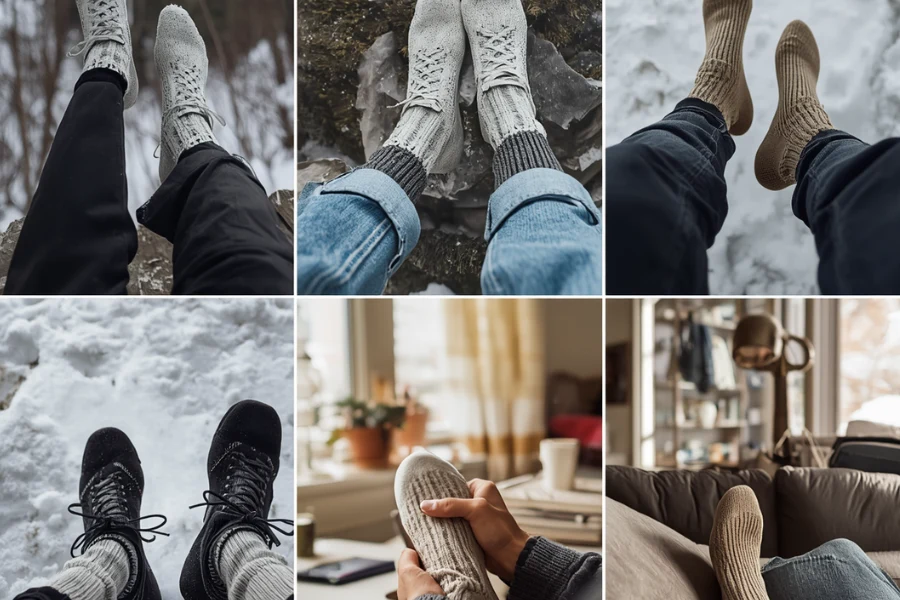
The best winter socks are determined by how they are used rather than how they look, because each environment places different demands on warmth, breathability, and fit.
For daily commuting, especially when moving between outdoor cold and indoor heating, a mid-weight merino wool sock provides stable warmth without causing overheating, which makes it easier to stay comfortable throughout the day without needing to change socks.
In office or indoor environments, lighter wool blends or breathable fibers offer enough insulation while preventing excessive heat buildup, which is particularly important when sitting for long periods.
Outdoor activities such as hiking, walking long distances, or standing in cold environments require thicker socks with cushioning and support, because repeated impact and extended exposure increase the need for both insulation and protection.
For high-movement activities like winter running or cycling, lighter performance-oriented socks with moisture control and a close fit perform better than thick options, because they maintain warmth without restricting movement or causing friction.
At home, where movement is limited and comfort is the priority, softer materials such as fleece-lined or relaxed wool socks create a stable and warm environment without pressure, allowing your feet to stay warm without feeling restricted.
When socks are designed for specific use cases, such as team uniforms, promotional products, or seasonal collections, working with a manufacturer like SocksMaven allows the material, thickness, and structure to be adjusted based on real usage scenarios, which ensures that the final product performs as expected rather than simply meeting visual requirements.
Key features that define high-quality winter socks
Warmth alone does not define a good winter sock, because performance comes from a combination of features that work together to maintain comfort over time.
Moisture management is one of the most critical elements, since dry feet retain heat more effectively than damp ones, which is why materials that move moisture away from the skin play a central role in maintaining warmth.
Temperature regulation ensures that your feet remain warm without overheating, particularly when transitioning between different environments, while cushioning in the heel and sole reduces pressure and absorbs impact during walking or standing.
Additional features such as anti-slip patterns improve safety for indoor use, and antimicrobial properties help maintain freshness during extended wear, while higher-cut designs provide additional protection by preventing cold air from entering through footwear openings.
Some products also include thermal ratings or insulation indicators, which can serve as a reference point when comparing options within the same product line, although real-world performance still depends on how the sock is used.
How to pair winter socks with different types of shoes
The interaction between socks and footwear plays a significant role in how warm your feet actually feel, because even well-designed socks can underperform if paired incorrectly.
With winter boots, longer socks that extend above the boot line help prevent cold air from entering and protect exposed skin, while also adding an extra layer of insulation around the lower leg.
For ankle boots or shorter footwear, a crew-length sock provides enough coverage without creating unnecessary bulk, which keeps the fit comfortable while maintaining warmth.
When wearing sneakers in winter conditions, thinner wool socks often perform better than thick ones because they maintain warmth while preserving space inside the shoe, which helps avoid pressure that could restrict circulation.
For formal footwear, thinner merino wool socks offer a practical balance between insulation and appearance, allowing you to stay warm without compromising the overall look.
In extremely cold environments, layering socks can improve insulation, but only if the footwear allows sufficient space, since tight shoes compress the sock layers and reduce their ability to trap heat effectively.
How to care for winter socks and extend their lifespan
The way you care for your socks directly affects how well they perform over time, because improper washing and drying can damage fibers and reduce insulation.
Washing socks inside out minimizes surface wear, while using cold or lukewarm water helps maintain the integrity of materials such as wool, which are sensitive to heat and agitation.
Mild detergents should be used to preserve fiber quality, and air drying is recommended because it prevents shrinkage and maintains elasticity, whereas high heat from dryers can weaken the structure of the sock.
Proper storage, including keeping socks in a dry and organized space and rotating between multiple pairs, allows each pair to recover between uses, which extends durability and maintains comfort across multiple seasons.
Choosing socks for seasonal transitions and year-round use
Some socks can adapt across multiple seasons, but their effectiveness depends on material and thickness rather than marketing claims.
Merino wool and certain bamboo blends offer natural temperature regulation, which allows them to provide warmth in cooler conditions while remaining breathable enough for mild weather, making them suitable for transitional periods such as early winter or late spring.
Medium-weight crew socks tend to offer the best balance for year-round use, as they provide enough insulation without becoming overly heavy, allowing them to work across a wider range of temperatures.
Testing socks in different conditions, such as wearing them during both cold mornings and warmer indoor settings, provides a more accurate understanding of how well they adapt, which is often more reliable than product descriptions alone.
What to do next
If you are choosing winter socks for everyday comfort, focus first on material and fit, because these determine whether your feet stay warm throughout the day.
If you are selecting socks for a specific use case, such as outdoor activities, team gear, or branded merchandise, consider how the socks will actually be used, since factors like thickness, structure, and material composition need to match real conditions, which is where solutions like SocksMaven’s flexible customization can help ensure the final product performs as intended rather than simply meeting basic expectations.
FAQ
Q: Can I wear winter socks while sleeping
Yes. Choose loose, breathable socks like merino wool or soft blends that keep feet warm without trapping moisture. Avoid tight styles, since restricted circulation can reduce warmth and cause discomfort overnight.
Q: Are two pairs of socks warmer than one
Layering is more effective when done correctly, using a thin inner sock to manage moisture and a thicker outer sock to trap heat. Make sure your shoes are not tight, or circulation may be reduced.
Q: Why are my feet still cold in wool socks
Cold feet in wool socks are usually caused by tight shoes, poor circulation, or moisture buildup. Even high-quality materials cannot perform well if airflow and overall body warmth are not maintained.
Q: Can socks still be used after pilling
Light pilling does not affect warmth or performance. However, if the fabric becomes thin or uneven, insulation will decrease, so replacing heavily worn socks helps maintain consistent comfort.
Q: What should I look for in children’s winter socks
Choose soft, breathable materials with a comfortable fit that does not restrict movement. Anti-slip soles are useful indoors, and proper sizing ensures warmth without pressure on growing feet.
Q: What does thermal rating mean
Thermal rating shows how warm a sock is within a specific product line, with higher numbers indicating stronger insulation. It helps compare options from the same brand but not across different brands.