Skip to content

How to keep branded socks from fading, shrinking, or losing shape
The best way to clean branded socks is simple—use cold water, a mild detergent, and always air dry, because most damage comes from heat, harsh chemicals, and friction rather than everyday wear.
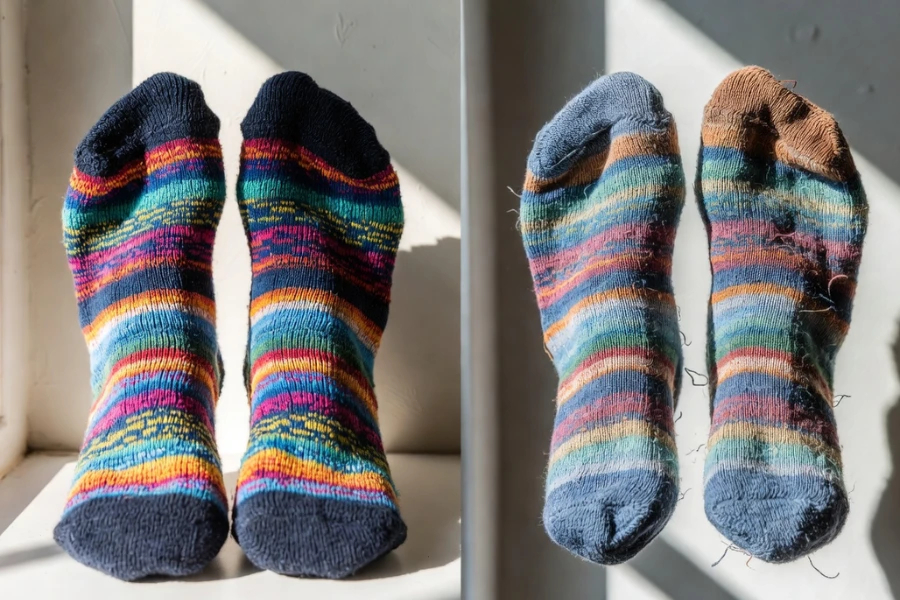
If your logo socks fade, stretch out, or lose shape too quickly, it usually means one of these three factors is wrong, and fixing them will immediately extend the life of your socks.
Why branded and custom socks need different care
Custom and brand-name socks are built differently from standard socks, often using jacquard knitting, embroidery, or printed designs that sit on the fabric surface and react differently to washing conditions.
Printed logos can fade under friction and heat, while elastic fibers used for compression, fit, and support can weaken when exposed to high temperatures or strong detergents.
This is especially important for business or event socks, where color clarity and shape directly affect brand presentation, not just comfort.
What you need before washing your socks

Before washing, a few preparation steps can prevent most long-term damage while keeping both structure and appearance intact.
Separate socks by color and material so that darker dyes do not transfer and delicate fabrics like wool are not exposed to harsher cycles designed for cotton or synthetic blends, and always turn socks inside out so the outer design is protected while the inner layer where sweat and skin particles collect gets cleaned properly.
If you are using a washing machine, placing socks in a mesh laundry bag reduces friction and prevents them from tangling with heavier garments, which is especially useful for custom logo socks or bulk branded orders.
How to wash custom and branded socks correctly

Step-by-step method
- Use cold or mildly warm water between 30–40°C, since heat is the main cause of shrinking, fading, and loss of elasticity.
- Choose a delicate or gentle cycle, or hand wash when dealing with detailed designs, wool blends, or premium custom socks that require minimal agitation.
- Apply a mild, color-safe detergent that cleans effectively without stripping dye or weakening fibers, and avoid bleach entirely because it permanently damages both fabric and printed or knitted designs.
- Treat stains locally by applying a small amount of detergent and gently working it into the fabric, allowing it to sit briefly before rinsing rather than scrubbing aggressively.
- Rinse thoroughly to remove detergent residue, because leftover chemicals can stiffen fibers and reduce comfort during wear.
This method works across most sock types, from everyday cotton socks to performance-based custom designs.
Drying mistakes that damage your socks
Drying is where most irreversible damage happens, especially when socks are exposed to high heat that breaks down elastic fibers and causes shrinkage.
Tumble drying may seem convenient, but repeated exposure to heat will shorten the lifespan of socks significantly, while air drying on a flat surface helps maintain their original shape and structure.
Avoid twisting or wringing wet socks because it stretches the fabric unevenly, and keep them out of direct sunlight since ultraviolet exposure gradually fades colors and weakens fibers.
How to store socks without stretching them
Storage directly affects how well socks maintain their shape over time, even if they are washed correctly.
Instead of rolling socks tightly into balls or stuffing one inside another, which stretches the cuff and reduces elasticity, fold or lightly roll them while keeping the fabric relaxed and aligned.
Store socks in a cool, dry space with enough room to lie flat, since overcrowded drawers can compress fibers and lead to long-term deformation.
How to make your socks last longer
Most sock damage comes from repeated stress rather than a single mistake, which means daily habits play a bigger role than many people expect.
Rotating between pairs allows socks to recover their shape and release moisture, while wearing properly fitted shoes reduces friction that often causes toe holes, especially in sports or everyday high-use scenarios.
For example, wearing the same gym socks two days in a row or pairing thin socks with tight sneakers will accelerate wear at the heel and toe much faster than normal use.
Quick fixes for holes, pilling, and loose threads
Small issues can quickly turn into bigger damage if left untreated, but simple fixes can extend the life of your socks significantly.
Minor holes can be stitched from the inside using matching thread to restore structure, while loose threads should be trimmed carefully instead of pulled to prevent unraveling along the knit.
Pilling can be removed with a fabric shaver, which keeps the surface clean without damaging the underlying material.
Care tips by sock material
Different materials respond differently to washing and drying, so adjusting your care routine based on fabric type improves both durability and performance.
Cotton socks can handle gentle machine washing at moderate temperatures but still benefit from air drying to preserve shape, while wool socks require cold water and minimal agitation and should always be reshaped while damp to prevent shrinkage.
Synthetic blends such as polyester or nylon are more resistant to wear but can lose moisture-wicking performance if exposed to fabric softeners, which is why they should always be washed with mild detergent and dried carefully.
Common mistakes to avoid
Many people shorten the life of their socks by treating them like standard clothing instead of performance or design-focused items.
Using fabric softener can coat fibers and block moisture-wicking function, ironing exposes socks to damaging heat, and bleach weakens fibers while stripping color from both printed and knitted designs.
Other common mistakes such as twisting socks to remove water, hanging them for long periods, or drying them in direct sunlight all contribute to stretching, fading, and long-term material damage.
How SocksMaven custom socks are built for durability
SocksMaven custom socks are designed with durability in mind, using high-quality yarns and advanced knitting techniques that help maintain elasticity, color clarity, and structural integrity even with regular use.
Whether you are creating branded socks for business promotion, team use, or retail, the combination of material selection, jacquard construction, and precise manufacturing ensures consistent performance across both small and bulk orders.
With flexible customization, no strict MOQ limitations, and global delivery support, SocksMaven makes it easier to produce socks that not only look professional but also hold up over time when cared for properly.
Simple takeaway
If you remember one thing, it should be this—avoid heat, avoid harsh chemicals, and avoid excessive friction, because these three factors cause nearly all sock damage.
Follow a simple routine of gentle washing, air drying, and proper storage, and your custom or branded socks will maintain their look, feel, and performance for much longer.
FAQ
Q1: Can I put branded socks in the dryer?
It is not recommended because high heat damages elastic fibers and causes shrinkage, which reduces both fit and durability over time, even if the socks appear fine after one cycle.
Q2: Why do custom socks fade after washing?
Fading usually happens due to hot water, strong detergents, or friction during washing, especially for printed designs that sit on the surface of the fabric.
Q3: How often should I wash my socks?
Socks should be washed after each use to remove sweat and bacteria, but using gentle washing methods ensures they stay in good condition despite frequent cleaning.
Q4: Can I wash different types of socks together?
You can, but only if they are similar in color and material, since mixing delicate fabrics with heavier items can lead to unnecessary wear and color transfer.
Q5: Do logo socks require special care?
Yes, especially if the design is printed, because it is more sensitive to heat and friction, so washing inside out with cold water helps preserve the logo.
Q6: Why do socks lose elasticity over time?
Elastic fibers weaken when exposed to heat, harsh chemicals, and repeated stretching, which is why proper washing and drying methods are essential.
Q7: Is fabric softener safe for socks?
No, because it leaves a coating on fibers that reduces breathability and moisture-wicking performance, especially in sports or performance socks.
Q8: What is the best way to prevent holes in socks?
Reducing friction is key, which means wearing properly fitted shoes, rotating socks regularly, and addressing small signs of wear before they become larger issues.